









Often, yes. Hip dips can be softened with fat transfer, where Dr Edwin Anthony takes a small amount of your own fat by gentle liposuction and places it into the hollow on the outer hip. At Contoura Medical, Langham Hospital, Marylebone, your plan and price are set out in writing after a consultation, from £85 by video.
Because the fat comes from an area such as the flanks or inner thighs, that area can be slimmed at the same time. Here is how Dr Anthony decides whether it will work for you.
The shape itself
What a hip dip actually is
A hip dip is the inward curve on the side of the body, just below the hip bone, where the waist meets the upper thigh. How deep it looks depends largely on the shape of your pelvis and on how fat sits above and below the curve, which is why many people find it changes little with diet or training.
A hip dip is not a medical problem, and plenty of people are happy with theirs. If yours bothers you, the realistic aim of treatment is a softer, smoother outline from waist to thigh, not a perfectly straight line.
How it is done
Fat transfer in three stages
Harvest
Fat is removed through small entry points from an area such as the abdomen, flanks or inner thighs, using fine cannulas that protect the fat cells. That donor area can be contoured at the same time with Vaser Lipo or Micro Lipo.
Refine
The fat is washed and filtered. For the hips, it is prepared as macrofat: larger fat parcels suited to structural volume, rather than the finer microfat used in the face.
Graft
The fat is placed in many small deposits, in different layers, so that each parcel sits close to a blood supply. Fat that gains a blood supply becomes living tissue.
Not every graft survives. Some fat is always reabsorbed in the first few months, which is why the result is judged at around six months and why a second, staged session is sometimes recommended. Read more about the technique on our fat grafting page.
Suitability
Who it suits, and when to think again
| Factor | What Dr Anthony looks for |
|---|---|
| Health | Adults aged 18 and over in good general health |
| Donor fat | Enough fat to harvest. Body grafting needs more than facial work, so slimmer patients are assessed carefully |
| Weight | A stable weight. Grafted fat behaves like fat elsewhere and changes with weight gain or loss, so it is not suitable if you are planning significant weight loss |
| Medical history | Extra caution if you smoke or vape, have poorly controlled diabetes or a bleeding disorder, or have had radiotherapy to the area |
| Skin | Where there is marked skin laxity, surgical lifting may work better than adding volume |
Safety
Keeping the hip and buttock area safe
Fat placed near the buttock needs particular care, because fat injected into or beneath the buttock muscle can enter large veins. The British Association of Aesthetic Plastic Surgeons recommends that fat is placed only in the layer under the skin, never into muscle, with ultrasound used during the procedure to confirm the cannula position.
Any hip or buttock contouring at Contoura Medical follows this guidance and uses modest volumes. If the volume you would like is more than the layer under the skin can safely hold, Dr Anthony will suggest staging treatment or tell you so plainly.
The NHS guide to surgical fat transfer also notes that some injected fat is reabsorbed in the first few months, that the full effect can take up to six months, and that larger areas may need two or more sessions.
Recovery
The first weeks and months
- Days 1 to 7Swelling and bruising at both the donor and treated areas
- Week 1Most people return to desk work within days to a week
- Weeks 2 to 4No pressure on the grafted hips, heavy training or saunas
- Weeks 6 to 12Swelling settles and the lasting volume becomes clearer
- Month 6Stable enough to judge whether a top up would help
Larger volume body grafting more commonly uses IV sedation, given by an anaesthetist alongside local anaesthetic. Dr Anthony recommends the right option for your plan at consultation, and you follow a tailored aftercare plan.
Cost
How your price is worked out
Hip dip fat transfer is priced individually, because no two plans use the same amount of fat or the same donor areas. Your written quote, given after consultation, sets out the procedure performed by Dr Anthony, hospital theatre fees, IV sedation where your plan needs it, any pre-operative tests and your review appointments.
| Consultation | Fee |
|---|---|
| Video consultation with Dr Anthony | £85 |
| In clinic consultation at Langham Hospital, recommended so your hips and donor areas can be examined | £125 |
| Advanced in clinic consultation with ultrasound | £295 |
Fat grafting is cosmetic treatment, so VAT is charged at the standard rate of 20%. Consultation fees are fixed and are not deducted from treatment prices. See our price list, and finance is available through a third-party provider, subject to status.
Your questions
Frequently asked questions
Can hip dips be fixed without surgery?
Contoura Medical does not offer fillers for the hips or buttocks. The option Dr Edwin Anthony offers is fat transfer, which uses your own fat taken by gentle liposuction. Because the shape of a hip dip is set largely by your pelvis, diet and exercise alone often make little difference to it.
How long does hip dip fat transfer last?
Once grafted fat has picked up a blood supply, it behaves as your own living tissue, so the softer hip line can stay for years. Some is always reabsorbed early, so the result is judged at around six months. If your weight rises or falls a lot, the hips will change with it, so a steady weight protects the result.
Will I need more than one session?
Sometimes. Because part of the fat is reabsorbed, a second, staged session is occasionally needed. Staging is also used when the volume you would like is more than the layer under the skin can safely hold in one treatment.
Is fat transfer to the hips safe?
All surgery carries risk. Expect swelling, bruising and some temporary lumpiness. Less often, fat is reabsorbed unevenly, the two sides end up different, or small oil cysts, firm patches of fat necrosis, infection or entry scars occur. Near the buttock, fat is placed only in the layer under the skin, never into muscle, following BAAPS guidance.
What anaesthetic is used for hip dip fat transfer?
Larger volume body grafting, such as the hips, more commonly uses IV sedation given by an anaesthetist alongside local anaesthetic. Dr Anthony recommends the right option for your plan at consultation.
Where does the fat for hip dips come from?
Usually from an area with spare fat, such as the abdomen, flanks or inner thighs. It is removed through small entry points, and that area can be contoured at the same time with Vaser Lipo or Micro Lipo.
Keep reading
Related questions
- How many areas of liposuction can you have at once?
- Can bad liposuction results be corrected?
- How much does facial fat transfer cost in London?
- All patient questions answered
Your doctor
About Dr Edwin Anthony

“I love the work and the challenge, and the positive impact I have on a patient’s confidence.”
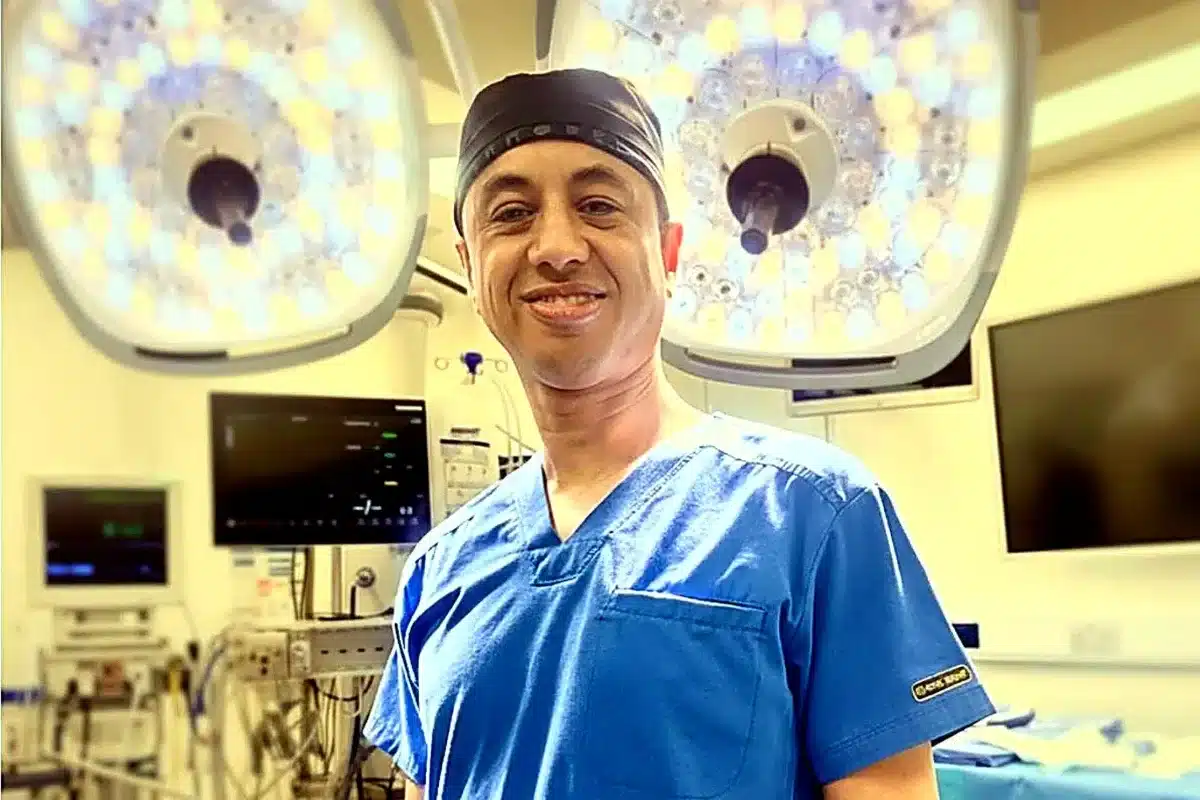
Dr Edwin Anthony is a GMC registered Cosmetic Doctor and Lead Clinician at Contoura Medical, and holds MRCS (Member of the Royal College of Surgeons of Edinburgh). He has 14 years of VASER experience with more than 1,500 VASER procedures, trained with Dr Alfredo Hoyos, and is a Lipoedema UK Recognised Clinician, an ILA Active Physician and a BACS member. He personally performs every procedure.
- GMC registered
- MRCS Edinburgh
- Lipoedema UK
- ILA Active Physician
- BACS
You can check his registration on the GMC medical register and read his PHIN profile.
Talk through your hip dips with Dr Anthony
Book a consultation at Langham Hospital or by video and find out honestly whether fat transfer suits you.
Call 020 3890 1911 or message us on WhatsApp on +44 7476 986577. Contoura Medical, Langham Hospital, 77 Hallam Street, Marylebone, London W1W 5HB.
Medically reviewed by Dr Edwin Anthony, Lead Clinician. Prices checked against the Contoura Medical price list on 16 November 2026.