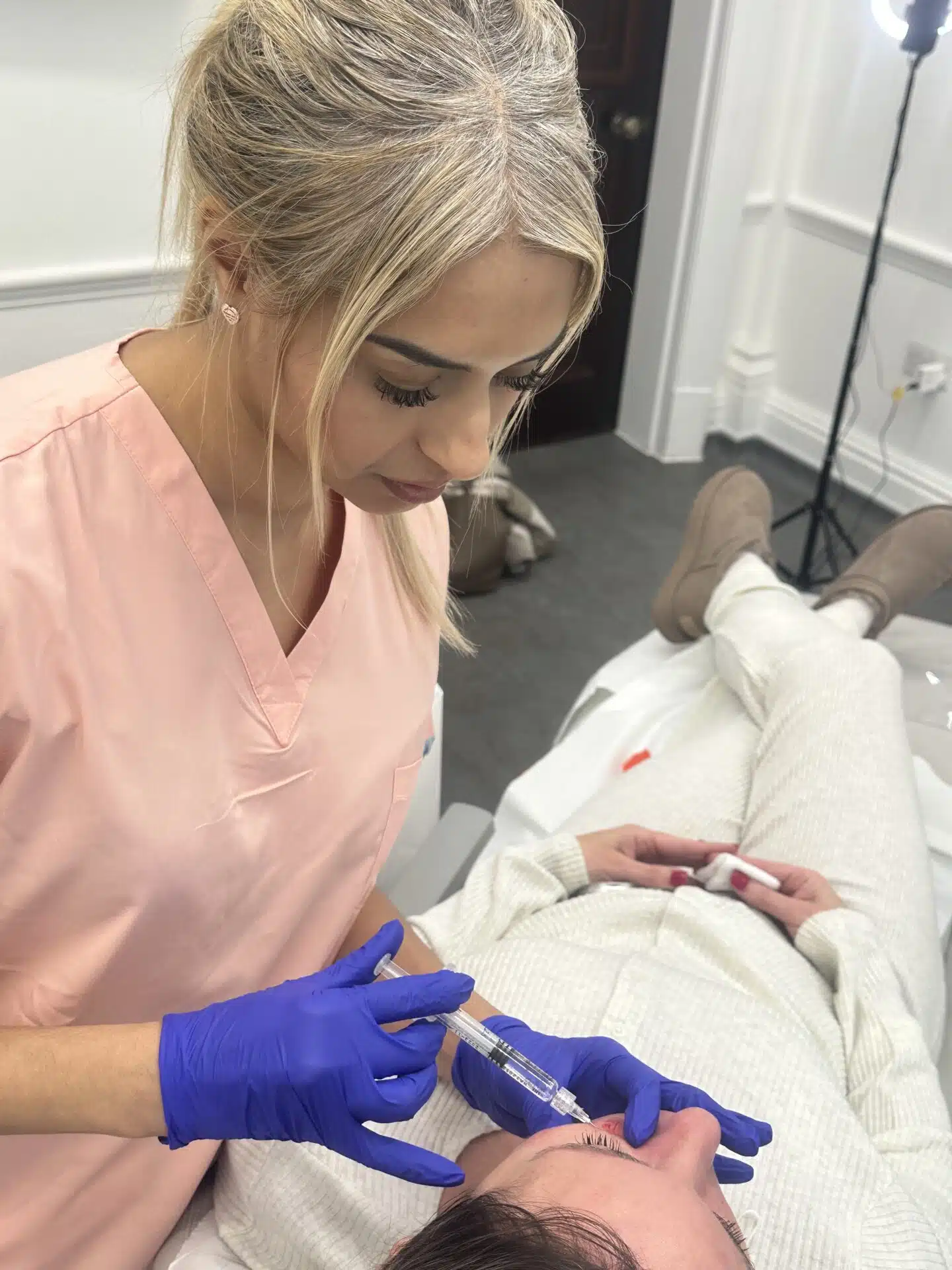
Microneedling is a skin treatment that uses fine needles to create controlled micro-injuries in the skin, stimulating the body’s natural collagen production to improve texture, tone and overall skin quality. Treatment depth, exosome/PRP choice and frequency are tailored to individual skin assessment at Orovenza.
Orovenza assesses your skin before treatment, so the depth of treatment and expected course of sessions can be discussed based on your goals.
Treatment Information
Treatment Details
What It Treats
Uneven texture, fine lines, enlarged pores and selected scarring concerns.
Treatment Approach
Needle depth and technique are tailored to your skin and the concern being addressed.
Downtime
Downtime is typically limited to temporary redness lasting a day or two.
Results Timeline
Improvement develops progressively over a course of sessions as collagen renewal continues.
The Process
How Microneedling Works
Skin Assessment
Your skin condition and concerns are assessed to determine suitability.
Treatment Planning
An appropriate treatment depth and course length is proposed.
Treatment
Microneedling is carried out under clinical supervision according to the agreed plan.
Aftercare
Aftercare guidance is provided to support healing between sessions.
By Dr Edwin Anthony, Lead Clinician, Contoura Medical · Treatments delivered by Nurse Rashmi Mehta · Last updated 4 October 2026
Microneedling is a medical skin treatment that uses fine needles to make controlled micro-injuries, prompting your skin to build new collagen. At Orovenza in Marylebone, London, it suits adults with uneven texture, fine lines, enlarged pores or mild acne scarring who want gradual, natural improvement.
What it is and how it works
Medical microneedling, also called collagen induction therapy, passes a sterile cartridge of very fine needles across the skin. Each needle creates a tiny channel. Your skin treats these as small wounds and responds by releasing growth factors and laying down fresh collagen and elastin over the following weeks.
Depth matters. According to DermNet's guide to skin needling, needles can reach up to 3 mm, although around 0.5 mm is typical to limit bleeding and speed recovery. We adjust depth area by area: shallower over the forehead and around the eyes, deeper over the cheeks where scarring tends to sit.
For selected patients, we can add exosomes or T Lab PRP (platelet-rich plasma prepared from your own blood) to the treatment. The research on these add-ons is still developing, so we only suggest them when we think they suit your skin and goals, and we explain the evidence honestly at consultation.
Who it is best suited for
Adults with rough or uneven skin texture, or dullness that skincare alone has not shifted.
Fine lines on the forehead, cheeks or around the mouth.
Enlarged pores, particularly across the nose and cheeks.
Mild to moderate acne scarring, especially shallow rolling scars.
People with darker skin tones looking for a lower pigment risk option than deeper resurfacing.
Anyone happy with steady change and a few days of redness.
Your treatment journey at Orovenza
Consultation and skin assessment. Nurse Rashmi Mehta examines your skin, takes a medical history and photographs, and checks for anything that means we should wait, such as active breakouts or recent isotretinoin.
Plan and skin preparation. You receive a written plan with the number of sessions, depth by area and any add-ons. We may ask you to use a gentle routine and strict daily SPF for two to four weeks beforehand.
Treatment day. Numbing cream goes on for around 30 to 45 minutes. The treatment itself usually takes 30 to 45 minutes, followed by a calming serum.
Aftercare. You go home with written instructions and a simple product routine, plus a direct number to call if you have any concerns.
Review. We see you before the next session to check healing, compare photographs and adjust depth or spacing.
Results and how long they last
Collagen builds slowly, so results arrive gradually. The American Academy of Dermatology notes that for acne scars you may need 3 to 5 treatments performed every 2 to 4 weeks, and that studies found this approach can fade acne scars by 50% to 70%. Full results usually take several months.
DermNet reports that skin rejuvenation can appear from around 2 weeks, with continued improvement for as long as 6 to 8 months. Scar improvement tends to be long lasting, while ageing continues, so many people with lines or texture concerns choose one or two maintenance sessions a year.
Recovery and aftercare
Day 0: skin looks pink to red, like a mild sunburn, and may feel warm and tight. Avoid makeup for 24 hours.
Days 1 to 3: redness settles to pinkness. Mild swelling is common, especially after deeper work. Cleanse gently with lukewarm water.
Days 3 to 5: light dryness or fine flaking. Do not pick. Keep moisturising.
Day 7: most people look back to normal. You can usually restart active skincare once the skin feels comfortable.
Throughout: avoid saunas, swimming pools and hard exercise for 48 hours, and wear SPF 50 every day.
Safety, side effects and who should avoid it
Common and temporary: redness, tightness, swelling and pinpoint bleeding during treatment.
Less common: breakouts, milia, cold sore flare ups and, rarely, infection or pigment change.
Not suitable during active acne, eczema or skin infection in the treatment area.
Not suitable if you have taken isotretinoin recently, have a history of keloid scarring or heal poorly.
We will postpone treatment during pregnancy, cancer treatment or if your immunity is lowered.
How microneedling compares with other options
Treatment
Best for
Typical downtime
Usual sessions
Darker skin suitability
Microneedling
Texture, fine lines, pores, mild scarring
1 to 3 days of redness
3 to 5
Generally well suited
Morpheus8 Scale & Burst
Deeper scarring, laxity, texture
2 to 5 days
2 to 3
Usually suitable with careful settings
CO2 laser resurfacing
Deeper lines, scarring, sun damage
About a week, pinkness longer
1 to 3
Higher pigment risk, detailed assessment needed
Chemical peels
Dullness, marks, fine texture
0 to 7 days depending on depth
3 to 6
Superficial peels often suitable
How Orovenza compares
Treatment takes place in a hospital setting at Langham Hospital, 77 Hallam Street, Marylebone.
Nurse-led care from Nurse Rashmi Mehta, with medical oversight from Dr Edwin Anthony (GMC 4776646).
A consultation before every treatment, not only the first, so depth and add-ons reflect how your skin is responding.
A fixed consultation fee that is kept separate and is not deducted from treatment prices, so you know exactly what you are paying for.
Review appointments built into your plan, with photographs to track progress honestly.
Every plan starts with a face to face consultation at Langham Hospital. Consultation fees are fixed and are not deducted from treatment prices, and your practitioner confirms your personal treatment cost at consultation once your plan is agreed. Call 020 3890 1911 or Book a consultation
Frequently asked questions
How much does microneedling cost in London?
The cost depends on the area treated, how many sessions you need and whether exosomes or T Lab PRP are added. A full face course for scarring will differ from a single refresher for texture. Your practitioner confirms your personal cost at consultation, and the fixed consultation fee is separate from treatment prices.
Does microneedling hurt?
Most people describe it as prickly or scratchy rather than painful, because we apply numbing cream for 30 to 45 minutes first. Bony areas such as the forehead and upper lip feel more noticeable than the cheeks. We can adjust depth or pause at any point if you are uncomfortable.
How many microneedling sessions will I need?
Most people need three to five sessions spaced several weeks apart. Texture and pores often respond to three, while acne scarring usually needs the fuller course. We confirm the number at your consultation and review it as we go, since collagen response varies from person to person.
What is the downtime after microneedling?
Expect one to three days of redness, similar to mild sunburn, and sometimes light flaking by day four. Many people return to desk work the next day. Avoid makeup for 24 hours and hold off on the gym, saunas and swimming for 48 hours to reduce irritation and infection risk.
When will I see results from microneedling?
You may notice a fresher glow within a couple of weeks, but the real change comes from collagen building over several months. Improvement often continues for up to six months after your final session. We take photographs at each visit so you can compare progress fairly under the same lighting.
Is microneedling safe for darker skin?
Yes, microneedling is generally considered safe for all skin tones because it does not rely on heat to the skin surface. The main risk in darker skin is temporary pigmentation after inflammation, so we prepare the skin beforehand, choose depth carefully and insist on daily SPF during your course.
Can I have microneedling if I still get acne?
Not over active, inflamed spots. Needling through breakouts can spread bacteria and worsen inflammation. We will usually help you get acne under control first, sometimes with your GP or a dermatologist, and then start once the skin has been calm for several weeks. Occasional small spots elsewhere are usually fine.
Is microneedling with T Lab PRP or exosomes better than microneedling alone?
Some people see extra benefit, but the evidence is still limited, so we do not recommend add-ons for everyone. T Lab PRP uses your own blood, prepared on the day. Exosomes are applied topically. We suggest either only where we think it fits your skin, and explain the pros and limits first.
How long do microneedling results last?
Improvement in scarring is usually long lasting because the new collagen stays. Fine lines and texture continue to change as you age, so many people book one or two maintenance sessions a year. Good sun protection and a consistent skincare routine help protect the result between visits.
Is microneedling or Morpheus8 Scale & Burst better for me?
Microneedling suits texture, pores and milder scarring with less downtime. Morpheus8 Scale & Burst adds radiofrequency heat, so it can do more for deeper scarring and mild laxity, with a little more recovery. The right choice depends on your skin, scar type and goals, which we assess at consultation.
Pricing depends on the treatment plan and number of sessions required. Your practitioner will confirm the cost of your personal treatment plan at consultation. Consultation fees are fixed and are not deducted from treatment prices.
Nurse Rashmi Mehta is the Aesthetic Nurse for Orovenza non-surgical aesthetics service at Contoura Medical.
Orovenza provides a clinically led approach to non-surgical aesthetic treatments, with treatment planning centred on individual assessment, appropriate indications and natural-looking outcomes.
Patients are assessed before treatment so that the most appropriate option can be discussed based on their goals and clinical circumstances.
To provide the best experiences, we use technologies like cookies to store and/or access device information. Consenting to these technologies will allow us to process data such as browsing behaviour or unique IDs on this site. Not consenting or withdrawing consent, may adversely affect certain features and functions.
Functional
Always active
The technical storage or access is strictly necessary for the legitimate purpose of enabling the use of a specific service explicitly requested by the subscriber or user, or for the sole purpose of carrying out the transmission of a communication over an electronic communications network.
Preferences
The technical storage or access is necessary for the legitimate purpose of storing preferences that are not requested by the subscriber or user.
Statistics
The technical storage or access that is used exclusively for statistical purposes.The technical storage or access that is used exclusively for anonymous statistical purposes. Without a subpoena, voluntary compliance on the part of your Internet Service Provider, or additional records from a third party, information stored or retrieved for this purpose alone cannot usually be used to identify you.
Marketing
The technical storage or access is required to create user profiles to send advertising, or to track the user on a website or across several websites for similar marketing purposes.