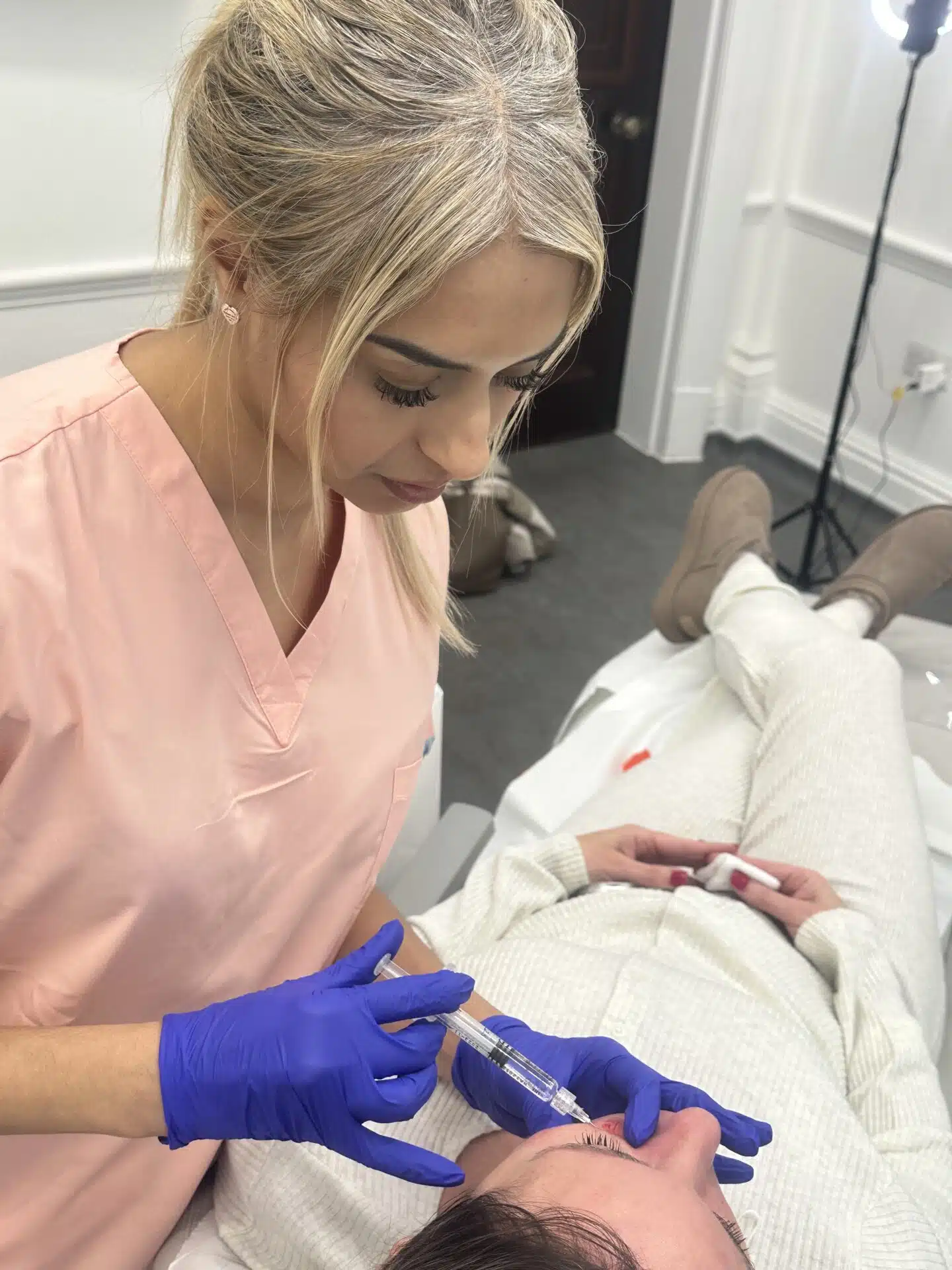
By Dr Edwin Anthony, Lead Clinician, Contoura Medical · Treatments delivered by Nurse Rashmi Mehta · Last updated 4 October 2026
Hair loss injectables are scalp treatments, mainly T Lab PRP, that use concentrated platelets from your own blood to support thinning hair. They suit adults with early male or female pattern hair loss or telogen effluvium, once the underlying cause has been properly checked.
What it is and how it works
Platelet-rich plasma, or PRP, is made from a small sample of your own blood. At Orovenza we use T Lab PRP: the blood is spun in a sealed tube to separate the platelets, which are then injected in tiny amounts across the thinning areas of the scalp. Platelets carry growth factors, and the aim is to support hair follicles that are shrinking but still alive.
PRP cannot bring back follicles that have gone completely, so it works best where there is thinning rather than smooth, shiny scalp. In pattern hair loss it usually works best alongside other measures.
Who it is best suited for
Androgenetic alopecia is the common inherited type, with a receding hairline or crown thinning in men and a widening parting in women. Telogen effluvium is diffuse shedding that often follows illness, stress, surgery, childbirth or rapid weight loss.
- Men and women with early to moderate pattern thinning
- People recovering from telogen effluvium who want to support regrowth
- Adults aged 18 and over who are in good general health
Before any injection we want to know why your hair is thinning. Iron deficiency, thyroid problems, hormonal changes and some medicines can all play a part. The NHS advises seeing a GP before going to a commercial hair clinic, and we agree. We may ask for recent blood tests, suggest you see your GP, or recommend a dermatologist if the picture points to scarring alopecia, alopecia areata or another condition that needs a specialist.
Your treatment journey at Orovenza
- Consultation. Nurse Rashmi Mehta takes a full history, examines your scalp, takes standardised photographs and discusses possible causes.
- Checks first. If the cause is unclear, we arrange or request blood tests, or refer you to your GP or a dermatologist before treating.
- Plan. If T Lab PRP is suitable, we agree a course, usually three to four sessions about four weeks apart.
- Treatment day. A blood sample is taken, processed on site and injected into the scalp.
- Review. We repeat photographs at around three and six months to compare like with like.
- Maintenance. Where there is a response, a top-up session every six to twelve months is common.
Results and how long they last
Hair grows slowly, so changes take months rather than weeks. Many people notice less shedding first, with any improvement in density following later. Results vary and regrowth cannot be promised.
- A 2023 meta-analysis of 9 randomised trials involving 238 patients found PRP significantly improved hair density at 3 and 6 months compared with placebo, although hair count and diameter did not differ significantly.
- Androgenetic alopecia is very common: around 50% of men are affected by age 50 and around 80% by age 70 in white populations, according to a StatPearls clinical review.
- The NHS notes that losing 50 to 100 hairs a day is normal, so we measure change with photographs rather than counting shed hairs.
Pattern hair loss is progressive, so any benefit fades if treatment stops. Telogen effluvium often settles on its own once the trigger is dealt with, and PRP may simply help the recovery along.
Recovery and aftercare
- Expect mild tenderness, redness or a tight feeling for a day or two
- Avoid washing your hair for around 12 hours, then use a gentle shampoo
- Skip hair dye, strong styling products, saunas and hard exercise for 48 hours
Safety and who should avoid it
Because T Lab PRP uses your own blood, allergic reactions are unlikely. The meta-analysis above reported no serious adverse reactions. Bruising, headache and brief discomfort are the usual side effects.
- Not suitable during pregnancy or breastfeeding
- Not suitable with blood or platelet disorders, or while taking blood-thinning medicines, without medical advice
- Postponed if you have a scalp infection or active skin condition in the area
- Not suitable with active cancer or some autoimmune conditions
- Scarring types of hair loss need a dermatologist first
T Lab PRP compared with other options
| Factor | T Lab PRP | Medical treatments | Hair transplant |
|---|
| What it involves | Scalp injections of your own platelets | Daily topical or oral medicines | Surgical relocation of follicles |
| Best for | Early to moderate thinning | Pattern hair loss, long-term control | Established bald areas with good donor hair |
| Commitment | Course then periodic top-ups | Ongoing, benefit stops if you stop | One or more procedures |
| Can restore lost follicles | No | No | Moves existing follicles to new areas |
We will talk honestly about these alternatives. Medical treatments recommended by the NHS may be the better first step for some people, and some are available on prescription only. With extensive loss, a hair transplant consultation may be more realistic.
How Orovenza compares
- Nurse-led treatment with doctor oversight from Dr Edwin Anthony (GMC 4776646)
- Delivered within a hospital setting at Langham Hospital, Marylebone
- Cause investigated before treatment, with referral when needed
- Standardised photographs so progress is measured, not guessed
Related treatments
Consultations take place at Langham Hospital, 77 Hallam Street, Marylebone, London W1W 5HB, or call 020 3890 1911. Consultation fees are fixed and are not deducted from treatment prices, and your practitioner confirms your personal treatment cost at consultation. Book a consultation
Frequently asked questions
Does PRP work for hair loss?
It can help some people, particularly with early pattern thinning or shedding after telogen effluvium. Trials show improved hair density at three to six months compared with placebo, but responses vary and some people see little change. We review your photographs at three months so you can decide whether to continue.
How many T Lab PRP sessions will I need?
Most people start with three to four sessions around four weeks apart. After that, if you have responded, a maintenance session every six to twelve months is common. Your plan depends on the type of hair loss, how advanced it is and whether you are using other treatments alongside.
Does it hurt?
Most people describe it as uncomfortable rather than painful. The scalp can feel tender and there are many small injections, but each session is fairly quick. We work steadily, can pause whenever you need, and most patients go straight back to work or home afterwards without any visible dressing.
Why do you ask about blood tests?
Because thinning hair is sometimes a sign of something treatable, such as low iron or a thyroid problem. Injecting the scalp without knowing the cause wastes time and money. We may ask for recent results, suggest you see your GP, or arrange tests before planning treatment.
Can women have PRP for thinning hair?
Yes. Female pattern hair loss, usually a widening parting, is one of the most common reasons women see us. Hormonal factors are often involved, so we look at your history carefully and may suggest GP or dermatology input. PRP is not given during pregnancy or breastfeeding.
When will I see results?
Usually not before three months, and sometimes closer to six. Hair grows slowly and each strand has to push through before it adds visible density, so change is gradual. Reduced shedding is often the first thing people notice, and comparing standardised photographs gives a fairer picture than a mirror.
Is PRP better than a hair transplant?
They do different jobs. PRP supports follicles that are thinning, while a transplant moves healthy follicles into areas that have lost hair. If you already have established bald areas, PRP alone is unlikely to satisfy you, and we will say so and discuss a transplant consultation.
Can I combine PRP with hair loss medicines?
Often, yes, and in pattern hair loss the combination tends to make more sense than either alone. We will ask what you are already using. Any prescription treatment is discussed with a prescriber, and Dr Edwin Anthony oversees the medical side of care at Orovenza.
What are the side effects?
Mild tenderness, redness, a little bruising and occasionally a headache are the usual effects, and they settle within a day or two. Infection is rare because the procedure is done with sterile technique. Serious reactions are uncommon because the plasma comes from your own blood.
Will the results last?
Not indefinitely for pattern hair loss, because the condition keeps progressing. Maintenance sessions every six to twelve months help hold any gains. Telogen effluvium is different: once the trigger resolves, hair often recovers on its own and PRP may not be needed in the long term.
Sources
- Hair loss, NHS
- Platelet-Rich Plasma for Androgenetic Alopecia: A Systematic Review and Meta-Analysis of Randomized Controlled Trials, Journal of Cutaneous Medicine and Surgery (PubMed)
- Androgenetic Alopecia, StatPearls (NCBI Bookshelf)