Quantum Vaser Lipo London

Quantum Vaser Lipo is Contoura Medical’s signature procedure: Vaser 4D Lipo and QuantumRF subdermal skin tightening in one session, under local anaesthetic with IV sedation. It suits adults with stubborn fat and mild skin laxity. Dr Edwin Anthony performs it at Langham Hospital, Marylebone.

What Quantum Vaser Lipo is and how it works

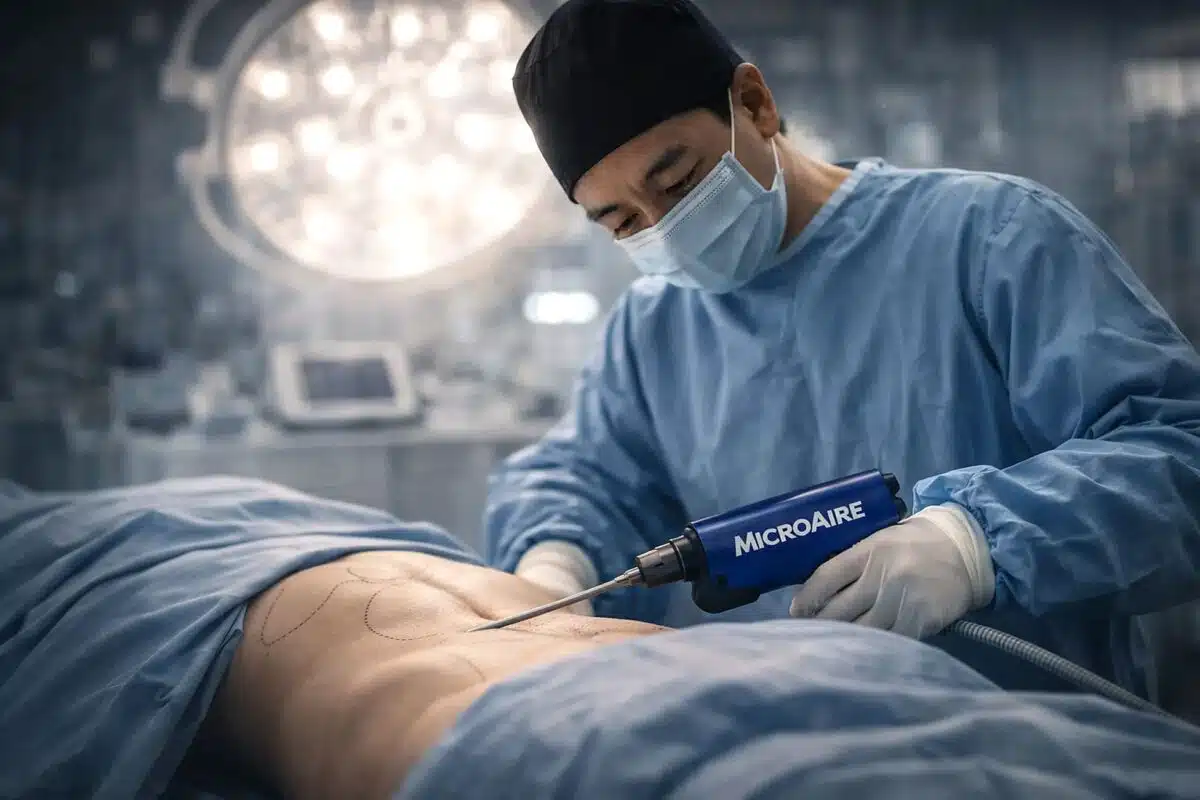
Quantum Vaser Lipo joins two procedures that are usually booked separately. The first stage is Vaser 4D Lipo: ultrasound energy loosens fat so it can be removed through small cannulas, with the fat taken selectively to follow the muscle beneath. The second stage is QuantumRF: a fine cannula delivers pulsed radiofrequency energy under the skin to heat and contract the connective tissue that has just been contoured.

Doing both in the same session means one anaesthetic, one recovery and one set of small entry points. It is surgery, carried out in an operating theatre, and it should be treated with the same care as any other surgical procedure.

  • Vaser 4D stage: removes unwanted fat and shapes the area
  • QuantumRF stage: tightens the skin over the treated area
  • Same session: both stages completed under one IV sedation

Who it suits, and who it does not

The typical patient has two concerns in the same place: a pocket of fat that has not shifted with diet, exercise or medication, and skin that has lost some of its spring. This is common after weight loss, including weight lost on GLP-1 medicines such as Mounjaro or Ozempic, and after pregnancy.

  • Adults aged 18 and over, at or near a stable weight
  • Minimal to mild skin laxity over areas of localised fat
  • Good general health, ideally non-smokers

It is not right for everyone. Quantum Vaser Lipo is not a weight-loss treatment, and it cannot remove hanging skin. If you have a true overhang or deep folds, a surgical skin-removal operation such as a tummy tuck is likely to be more honest advice. If your skin is firm, Vaser 4D Lipo on its own may be enough and the QuantumRF stage adds cost without benefit.

The procedure day at Langham Hospital

  1. Marking. Dr Edwin Anthony marks the areas with you standing, so contours are planned on your body as it really sits.
  2. Anaesthetic. Local anaesthetic with IV sedation given by an anaesthetist. You are relaxed and comfortable, without a general anaesthetic.
  3. Vaser 4D stage. Tumescent fluid is infiltrated, ultrasound loosens the fat and it is gently removed.
  4. QuantumRF stage. The radiofrequency cannula treats the tissue under the skin, with temperature monitored throughout.
  5. Garment. Small dressings and a compression garment go on before you leave theatre.

Most patients go home the same day with a companion. Procedures take place under Langham Hospital’s CQC registration.

Recovery timeline

  • Days 1 to 3: swelling, bruising, tightness and some fluid leakage from the entry points. Short walks help circulation.
  • Days 5 to 7: most patients return to desk-based work.
  • Weeks 2 to 4: bruising fades. Gentle exercise is usually reintroduced on Dr Anthony’s advice.
  • Weeks 6 to 8: the compression garment is typically no longer needed and normal training resumes.
  • Months 3 to 6: swelling settles and the skin continues to contract as collagen remodels.

The NHS notes that liposuction swelling can take up to 6 months to settle fully, so early photographs rarely show the final result.

Results and how long they last

Fat cells removed by liposuction do not grow back, although remaining fat cells can still enlarge if you gain weight. The skin tightening is gradual: improvement builds over months rather than appearing on the day. Results vary with age, skin quality, smoking and weight stability, and no result can be promised.

Risks and safety

Every surgical procedure carries risk. Common effects are bruising, swelling, temporary numbness and firmness. Less common problems include contour irregularity, seroma (a fluid collection), infection, burns from energy devices, pigmentation change and, rarely, blood clots.

A 2022 series of 261 third-generation VASER patients reported an overall complication rate of 4.6%, with contour irregularity in 1.9% and seroma in 0.8%. In the same series, 86% of patients said they would recommend the procedure. Adding a second energy device lengthens the procedure, which is one reason careful selection matters.

How it compares

Factor Quantum Vaser Lipo Vaser 4D Lipo alone QuantumRF alone Tummy tuck
Main aim Fat removal and skin tightening Fat removal and definition Skin tightening only Removal of excess skin
Anaesthetic Local with IV sedation Mainly IV sedation with local Local, sedation optional General
Suits Fat plus mild laxity Fat with good skin tone Laxity with little fat Overhanging skin
Scars Small entry points Small entry points Small entry points Long lower abdominal scar

If fat is the larger concern and skin laxity is more than mild, BodyTite Turbo is another option we may discuss.

Why patients choose Dr Edwin Anthony

  • Dr Edwin Anthony, Lead Clinician, Contoura Medical (GMC 4776646), personally performs every procedure
  • Over 1,500 VASER procedures and 14 years of dedicated VASER practice
  • Trained with Dr Alfredo Hoyos in high-definition liposculpture; MRCS (Edinburgh); NHS plastic surgery and burns training; graduate of Trinity College Dublin
  • Langham Hospital, within the Harley Street medical district, 2 minutes’ walk from Great Portland Street and Regent’s Park stations

Related procedures

Consultations take place with Dr Edwin Anthony at Langham Hospital, 77 Hallam Street, Marylebone, London W1W 5HB, or by video. Call 020 3890 1911. Consultation fees are fixed and are not deducted from treatment prices. Your full price is confirmed in writing after consultation, with hospital theatre fees and IV sedation itemised in the quote, and finance is available through Chrysalis Finance (see finance). Book a consultation

Frequently asked questions

What is the difference between Quantum Vaser Lipo and QuantumRF?

QuantumRF is skin tightening only: a fine cannula heats the tissue under the skin to make it contract. Quantum Vaser Lipo adds Vaser 4D Lipo in the same session, so fat is removed and the overlying skin is tightened together. If you have loose skin but very little fat, QuantumRF alone may be the better fit.

Is Quantum Vaser Lipo the same as standard VASER liposuction?

No. Standard VASER liposuction removes fat using ultrasound to loosen it first. Quantum Vaser Lipo uses the Vaser 4D technique for shaping and then adds QuantumRF skin tightening under the same anaesthetic. The extra stage is only worthwhile when there is some skin laxity; with firm skin, VASER alone is usually enough.

Is Quantum Vaser Lipo suitable after Mounjaro or Ozempic weight loss?

It can be, if you have leftover pockets of fat and minimal to mild skin laxity. Your weight should be stable, ideally for around three months, before surgery. If you have hanging skin or deep folds, a surgical skin-removal operation is likely to give a better result, and Dr Anthony will tell you so at consultation.

What anaesthetic is used for Quantum Vaser Lipo?

Quantum Vaser Lipo is performed under local anaesthetic with IV sedation, given by an anaesthetist at Langham Hospital. You are relaxed and comfortable but breathing on your own, so a general anaesthetic is not needed. Most patients go home the same day, and you will need someone to accompany you.

How long is recovery after Quantum Vaser Lipo?

Most patients return to desk-based work within 5 to 7 days. Bruising fades over two to four weeks, and a compression garment is worn for several weeks to support healing. Swelling can take up to six months to settle completely, and the skin continues to tighten gradually over that time.

How much does Quantum Vaser Lipo cost?

The cost depends on how many areas are treated and how long the procedure takes. Dr Anthony confirms your full price in writing after consultation, with hospital theatre fees and IV sedation itemised in the quote. Our price list shows current fees, and finance is available through Chrysalis Finance for eligible patients.

Is Quantum Vaser Lipo done in one session?

Yes. The Vaser 4D Lipo stage and the QuantumRF skin tightening stage are both completed in a single session at Langham Hospital. That means one anaesthetic and one recovery period rather than two. Occasionally a small touch-up is discussed later, but most patients have a single procedure.

What are the risks of Quantum Vaser Lipo?

Bruising, swelling, firmness and temporary numbness are expected. Less common risks include contour irregularity, seroma, infection, burns from energy devices and pigmentation change, and blood clots are rare. In a published series of 261 VASER patients the overall complication rate was 4.6%. Dr Anthony explains your personal risks at consultation.

Will I have scars?

You will have a small number of entry points, each a few millimetres long, placed in natural creases where possible. They are usually pink at first and fade over the following months. This is very different from a tummy tuck, which leaves a long scar across the lower abdomen.

Who performs Quantum Vaser Lipo at Contoura Medical?

Every Quantum Vaser Lipo procedure is performed personally by Dr Edwin Anthony, Lead Clinician at Contoura Medical, GMC 4776646. He has performed over 1,500 VASER procedures across 14 years of dedicated VASER practice and trained with Dr Alfredo Hoyos in high-definition liposculpture. The procedure is not delegated to other clinicians.

Sources

  1. Safety and Efficacy of Third-Generation Ultrasound-Assisted Liposuction: A Series of 261 Cases, Aesthetic Plastic Surgery (PubMed)
  2. Liposuction, NHS
  3. Tummy tuck (abdominoplasty), NHS

Body Contouring London

Body contouring at Contoura Medical covers surgical fat removal and skin tightening, from Micro Lipo for one small area to Vaser Hi-Def and Quantum Vaser Lipo. It suits adults near a stable weight. Dr Edwin Anthony performs every procedure at Langham Hospital, Marylebone, London.

What body contouring is, and what it is not

Body contouring reshapes areas where stubborn fat, loose skin or both spoil the outline you want. At Contoura Medical it means liposuction using VASER ultrasound or power-assisted technology, sometimes combined with skin tightening in the same session. Nearly all of these options are surgery, performed in a hospital theatre with consent, aftercare and follow-up.

It is not a weight-loss treatment. The NHS is clear that liposuction is not a treatment for obesity and will not remove cellulite or stretch marks. The people who do well are usually close to their goal weight and bothered by particular areas that have not changed with diet, training or GLP-1 medicines.

Choosing between the procedures

The right option depends on four things: how much fat there is, how good your skin elasticity is, whether you want a smoother shape or visible muscle definition, and how much downtime you can take. This table is a starting point, not a prescription.

Procedure Anaesthetic Typically suits Usual return to desk work
Micro Lipo Local anaesthetic One or two small pockets, such as under the chin, flanks or knees 2 to 5 days
Vaser Lipo Local anaesthetic, IV sedation available Moderate fat in up to five areas, with good skin 2 to 3 days
Vaser 4D Lipo Mainly IV sedation with local anaesthetic Larger volumes or several areas, with some sculpting and definition About 5 days
Vaser 360 Lipo IV sedation with local anaesthetic The whole torso: upper and lower abdomen, flanks and lower back About 5 days
Vaser Hi-Def Local anaesthetic with IV sedation Lean, active people wanting visible abdominal, chest or arm definition Light activity in 2 to 3 days, strenuous exercise after 4 weeks
Quantum Vaser Lipo Local anaesthetic with IV sedation Fat plus mild skin laxity, including after weight loss 5 to 7 days
Skin tightening alone Varies by device Laxity without much fat to remove Depends on the device

How to decide: questions we work through

  1. How much fat is there? A small, pinchable pocket often suits Micro Lipo. Several areas or larger volumes point to Vaser Lipo or Vaser 4D Lipo.
  2. Where is it? If the concern is the whole waist, front and back, Vaser 360 Lipo treats the torso as one unit so the result looks even from every angle.
  3. Do you want definition? Vaser Hi-Def sculpts fat around muscle groups, but it only suits people who are already lean and train regularly.
  4. How is your skin? VASER gives some skin retraction when elasticity is good. With mild laxity, Quantum Vaser Lipo adds QuantumRF tightening in the same session. With a lot of loose skin, a skin-removal operation may be more honest advice.
  5. What anaesthetic and downtime suit you? Local anaesthetic options mean less time off. IV sedation allows bigger treatment plans in one visit.

Skin tightening options

Several technologies can tighten skin, either alongside liposuction or on their own:

  • QuantumRF: radiofrequency delivered beneath the skin through a fine probe
  • Renuvion: helium plasma energy applied under the skin, often used during liposuction
  • BodyTite Turbo and EmbraceRF2: minimally invasive radiofrequency for body and lower face
  • Thermage FLX: non-invasive radiofrequency from the skin surface, with no incisions

Which device suits you depends on how much laxity there is, where it is, and whether liposuction is being done at the same time.

The procedure day and recovery

All procedures take place at Langham Hospital, 77 Hallam Street, within the Harley Street medical district. You are marked standing up, the anaesthetic is given, and Dr Anthony carries out the whole operation himself. Most procedures take 90 minutes to three hours, and you go home the same day in a compression garment.

  • Days 1 to 3: soreness, swelling, bruising and fluid drainage from entry points. Walking helps.
  • Days 2 to 7: return to desk-based work, depending on the procedure.
  • Weeks 1 to 2: light exercise for smaller procedures.
  • Weeks 4 to 6: compression is usually worn day and night, and intense training resumes towards the end of this period.
  • Week 12 onwards: the final shape shows. The NHS notes it can take up to 6 months for an area to settle completely.

Results, risks and safety

Fat cells removed do not grow back, but remaining fat can still expand with weight gain. Results vary between individuals and cannot be promised. In a published series of 261 patients treated with third-generation ultrasound-assisted liposuction, the overall complication rate was 4.6%, including contour irregularity in 1.9% and seroma in 0.8%, and 86% of patients said they would recommend the procedure.

  • Common: bruising, swelling, numbness and firmness for several weeks
  • Less common: uneven contour, seroma, infection, skin colour change, scarring at entry points
  • Rare but serious: blood clots, excessive bleeding, fluid imbalance or internal injury

Why patients choose Dr Edwin Anthony

  • Dr Edwin Anthony, Lead Clinician, Contoura Medical (GMC 4776646), personally performs every procedure
  • Over 1,500 VASER procedures and 14 years of dedicated VASER practice
  • Trained with Dr Alfredo Hoyos in high-definition liposculpture
  • Trinity College Dublin (MB BCh BAO), MRCS (Edinburgh), NHS plastic surgery and burns training
  • Regulated services provided under Langham Hospital’s CQC registration

Related procedures

Consultations take place at Langham Hospital, 77 Hallam Street, Marylebone, London W1W 5HB, two minutes’ walk from Great Portland Street and Regent’s Park stations, or by video. Call 020 3890 1911. Consultation fees are fixed and are not deducted from treatment prices. Your full price is confirmed in writing after consultation, with hospital theatre fees and any IV sedation itemised; see our price list. Finance is available through Chrysalis Finance. Book a consultation

Frequently asked questions

What is the difference between Micro Lipo and Vaser Lipo?

Micro Lipo uses a fine vibrating power-assisted cannula under local anaesthetic for one or two small pockets of fat. Vaser Lipo adds ultrasound energy to loosen fat first, which suits larger or more fibrous areas and up to five areas in one session. Both are day-case surgery at Langham Hospital with a short recovery.

Is Vaser 4D Lipo the same as Vaser Hi-Def?

They are related but not identical. Vaser 4D Lipo removes larger volumes across several areas and adds some sculpting. Vaser Hi-Def focuses on the fat layer around specific muscles to reveal definition, such as the abdominal lines, and needs a lean, active starting point. Both are usually done with IV sedation and local anaesthetic.

What does Vaser 360 Lipo treat?

Vaser 360 Lipo treats the torso all the way round: the upper abdomen, lower abdomen, flanks and lower back. Treating these together gives a more even waistline from the front, side and back than treating one area at a time. It removes fat and does not repair separated abdominal muscles or remove loose skin.

What is Quantum Vaser Lipo?

Quantum Vaser Lipo combines Vaser 4D Lipo with QuantumRF skin tightening in a single session under local anaesthetic with IV sedation. It is designed for people who have stubborn fat and mild skin laxity in the same area, including some patients after weight loss with GLP-1 medicines. Marked loose skin may still need surgical removal.

Is body contouring a way to lose weight?

No. Liposuction and skin tightening reshape specific areas, but they are not a treatment for obesity and will not change your overall weight much. The most natural results come when you are already close to a stable, healthy weight. If significant weight loss is still planned, it is usually wiser to reach your goal first.

How much does body contouring cost in London?

Cost depends on the procedure, the number of areas, whether skin tightening is added and whether IV sedation is needed. Dr Anthony confirms your full price in writing after consultation, with hospital theatre fees itemised. Our price list shows current guide figures for each procedure, and finance is available through Chrysalis Finance.

Does body contouring hurt?

Local anaesthetic numbs the treated areas, and IV sedation is available for larger procedures, so most people are comfortable during surgery. Afterwards expect soreness, tightness and bruising, similar to a very hard workout, for several days. Prescribed pain relief and the compression garment help, and discomfort usually eases considerably within the first week.

When will I see my final results?

Some change is visible once early swelling settles after two to six weeks. The final shape usually shows at around twelve weeks, although firmness and minor swelling can take up to six months to resolve fully. Definition procedures such as Vaser Hi-Def may continue to refine for several months after that.

What are the risks of body contouring surgery?

Common effects are bruising, swelling and temporary numbness. Less common risks include contour irregularity, fluid collection, infection, skin colour change and noticeable scarring at entry points. Rare but serious complications include blood clots and bleeding. Dr Anthony discusses your individual risks, and how they are reduced, before you decide.

Who performs body contouring at Contoura Medical?

Dr Edwin Anthony, Lead Clinician at Contoura Medical, performs every procedure himself at Langham Hospital, Marylebone. He is GMC registered (4776646), trained with Dr Alfredo Hoyos in high-definition liposculpture, and has completed over 1,500 VASER procedures across 14 years of dedicated VASER practice.

Sources

  1. Liposuction, NHS
  2. Safety and Efficacy of Third-Generation Ultrasound-Assisted Liposuction: A Series of 261 Cases, Aesthetic Plastic Surgery (Springer)

Gynaecomastia Surgery London

Gynaecomastia correction is day-case surgery that flattens enlarged male chest tissue using VASER liposuction, with small-incision gland removal where needed. It suits adult men with persistent chest fullness. Dr Edwin Anthony performs every procedure at Langham Hospital, Marylebone, London.

What gynaecomastia is and how correction works

Gynaecomastia means enlarged breast tissue in men. It can affect one or both sides, and many men put off asking about it for years. According to StatPearls, it tends to appear in boys from around age 13, and becomes more common again in men aged 65 and over. The fullness is usually made of fat, gland, or both:

  • Pseudo-gynaecomastia: mainly fat. This usually responds to VASER liposuction alone.
  • True gynaecomastia: firm glandular tissue sitting behind the nipple. Liposuction cannot remove this, so a small excision is added.
  • Mixed gynaecomastia: fat and gland together. This is the most common picture we see.

VASER uses ultrasound energy to loosen fat so it can be removed through tiny entry points with less force than traditional liposuction. Any firm gland left behind is removed through a short incision at the edge of the areola.

Checking the cause comes first

Before any surgery we want to know why the tissue has grown. The NHS lists hormonal changes, being overweight, side effects of some medicines, anabolic steroids, and conditions affecting the thyroid, kidneys or liver among the causes. Some of these can be treated without an operation.

  • We review every medicine and supplement you take, including anything bought for the gym
  • We examine both sides of the chest and, where needed, use ultrasound
  • If anything suggests a hormonal problem, we ask your GP for blood tests before planning surgery

A new, hard or one-sided lump, nipple discharge or skin change needs checking by your GP promptly, whatever your plans for surgery.

Who it suits, and who it does not

Correction tends to suit men aged 18 and over who:

  • Have had chest fullness for at least a year that has not settled with weight loss or exercise
  • Are at or near a stable, healthy weight
  • Are in good general health and do not smoke, or can stop around surgery
  • Have had any hormonal or medication cause looked at and dealt with

Men with a lot of loose skin or a low-hanging nipple may need a skin-removal operation instead, and we will tell you if that is the case. Gynaecomastia in puberty often settles on its own, which is one reason we treat adults only.

The procedure day at Langham Hospital

  1. Arrival and marking. Dr Anthony reviews your consent, then marks the chest standing up so the plan follows your natural shape.
  2. Anaesthetic. Most men have local anaesthetic only and stay awake. IV sedation, given by an anaesthetist, is available if you prefer to be drowsy.
  3. VASER and liposuction. Fat is loosened and removed from the chest and, where needed, the armpit edge through entry points of a few millimetres.
  4. Gland removal if needed. Any firm gland is taken out through a short incision at the edge of the areola.
  5. Home the same day. Most procedures take 60 to 90 minutes. You leave in a compression vest with written aftercare and a direct contact number.

Recovery timeline

  • Days 1 to 3: soreness and bruising, managed with simple pain relief. Most men return to desk-based work by day 2 or 3.
  • Weeks 1 to 2: review with the team; bruising fades. Avoid lifting and chest exercises.
  • Weeks 4 to 6: the compression vest is worn day and night for this period. Gym work is reintroduced gradually.
  • Weeks 8 to 12: swelling settles enough for the final shape to show.

Results, risks and safety

The fat cells and gland removed do not grow back. Remaining tissue can still enlarge with significant weight gain, steroid use or new medicines, so a stable weight matters. Results vary between individuals and cannot be promised.

In a 2025 multi-centre study of 960 men treated with VASER plus gland excision through a small incision, the complication rate was 1.7%, mostly minor issues such as bruising, temporary numbness and haematoma, and mean satisfaction was 9.4 out of 10. Possible risks include:

  • Bruising, swelling and temporary numbness of the chest or nipple
  • Haematoma (a collection of blood) or seroma (a collection of fluid) that may need draining
  • Contour irregularity, asymmetry, or a slightly sunken area under the nipple
  • Infection, delayed healing or a more visible scar
  • Rarely, blood clots or a reaction to anaesthetic

How the options compare

Factor VASER liposuction alone VASER plus small gland excision Open excision with skin removal
Suits Mainly fatty chest Mixed or glandular chest Marked loose skin or low nipple position
Anaesthetic at Contoura Usually local, IV sedation optional Usually local, IV sedation optional Usually general, discussed case by case
Scars A few millimetre entry points Entry points plus a short areolar scar Longer scars on the chest
Desk work Usually 2 to 3 days Usually 2 to 5 days Often 1 to 2 weeks

Why patients choose Dr Edwin Anthony

  • Dr Edwin Anthony, Lead Clinician, Contoura Medical (GMC 4776646), personally performs every procedure
  • Over 1,500 VASER procedures and 14 years of dedicated VASER practice
  • Trained at Trinity College Dublin (MB BCh BAO), MRCS (Edinburgh), with NHS plastic surgery and burns training
  • Surgery at Langham Hospital, within the Harley Street medical district, under the hospital’s CQC registration

Related procedures

Consultations take place at Langham Hospital, 77 Hallam Street, Marylebone, London W1W 5HB, two minutes’ walk from Great Portland Street and Regent’s Park stations, or by video. Call 020 3890 1911. Consultation fees are fixed and are not deducted from treatment prices. Your full price is confirmed in writing after consultation, with hospital theatre fees and any IV sedation itemised; see our price list and finance through Chrysalis Finance. Book a consultation

Frequently asked questions

What causes gynaecomastia in adult men?

Common causes include hormonal changes with age, being overweight, anabolic steroids, and side effects of some medicines. Conditions affecting the thyroid, kidneys or liver can also play a part, and in many men no single cause is found. That is why Dr Anthony reviews your medicines and history, and may ask your GP for blood tests before surgery is planned.

Can gynaecomastia be treated without surgery?

Sometimes. Gynaecomastia in puberty often settles by itself, and fullness caused by a medicine may improve if a doctor can safely change it. Losing weight helps where the chest is mainly fatty. Firm glandular tissue that has been present for more than a year rarely goes away on its own, and at that stage surgery is usually the only reliable way to remove it.

Is gynaecomastia surgery done under general anaesthetic?

Not usually at Contoura Medical. Most men have VASER gynaecomastia correction under local anaesthetic as a day case at Langham Hospital, and stay awake throughout. If you would prefer to be drowsy and relaxed, IV sedation given by an anaesthetist is available. Men with a lot of loose skin who need a larger excision are assessed individually.

How much does gynaecomastia surgery cost in London?

The cost depends on whether you need liposuction alone or gland removal as well, whether the armpit area is included, and whether you choose IV sedation. Dr Anthony confirms your full price in writing after consultation, with hospital theatre fees itemised. Our price list gives current guide figures, and finance is available through Chrysalis Finance.

How long is recovery from gynaecomastia surgery?

Most men return to desk-based work within two to three days. You wear a compression vest day and night for four to six weeks, avoid chest exercises and heavy lifting for the first few weeks, and build training back up gradually. Swelling settles slowly, and the final shape is usually visible at eight to twelve weeks.

Is gynaecomastia correction painful?

The local anaesthetic makes the procedure itself comfortable for most men, although you may feel pressure and movement. Afterwards the chest feels sore, tight and bruised for several days, similar to a hard gym session. Simple pain relief and the compression vest usually control this, and discomfort eases after the first week.

Will there be visible scarring?

VASER liposuction uses entry points of a few millimetres, placed in natural creases where possible, and these usually fade well. If gland needs removing, Dr Anthony uses a short incision at the lower edge of the areola, where the colour change helps hide it. Scars take up to a year to mature, and healing varies between people.

Does gynaecomastia come back after surgery?

The fat cells and gland that are removed do not return. However, any remaining tissue can enlarge again with significant weight gain, anabolic steroid use or certain medicines. Keeping a stable weight and avoiding steroids and prohormones helps the result last, which is why we discuss these openly before surgery.

What are the main risks of gynaecomastia surgery?

Common effects are bruising, swelling and temporary numbness. Less common risks include a collection of blood or fluid that needs draining, contour irregularity, asymmetry, a slightly hollow area under the nipple, infection and noticeable scarring. Serious problems such as blood clots are rare. Dr Anthony discusses your individual risks at consultation and on the day.

Who performs gynaecomastia surgery at Contoura Medical?

Dr Edwin Anthony, Lead Clinician at Contoura Medical, performs every procedure himself. He is GMC registered (4776646), holds MRCS from the Royal College of Surgeons of Edinburgh, trained in NHS plastic surgery and burns units, and has carried out over 1,500 VASER procedures across 14 years of dedicated VASER practice at Langham Hospital.

Sources

  1. Gynaecomastia, NHS
  2. Gynecomastia, StatPearls (NCBI Bookshelf)
  3. Correction of Gynecomastia with Combination of Ultrasonic Liposuction (VASER) and Gland Excision through a Minimal Scar Incision: A Multi-Center Experience, Aesthetic Plastic Surgery (Springer)

VASER Liposuction London

VASER liposuction is ultrasound-assisted fat removal for adults with stubborn, diet-resistant fat. Our core procedure, Vaser Lipo, is done under local anaesthetic as a day case. Dr Edwin Anthony performs every procedure himself at Langham Hospital, Marylebone, London.

How VASER liposuction works

VASER stands for Vibration Amplification of Sound Energy at Resonance. After the area is filled with a numbing fluid, a slim probe delivers ultrasound energy into the fat layer. Fat cells absorb that energy, loosen and partly liquefy, and are then removed through fine cannulas passed through small entry points of a few millimetres.

Because the energy is taken up mainly by fat, nerves, blood vessels and connective tissue are largely spared. In practice that tends to mean less bruising and a smoother finish than purely mechanical liposuction. It is still surgery, carried out in an operating theatre.

VASER is not a weight-loss treatment. The NHS is clear that liposuction is not a treatment for obesity, and we agree.

The five VASER procedures compared

The right procedure depends on how much fat there is, how many areas you want treated, your skin quality and how much definition you want.

Procedure Anaesthetic Typical scope Aim
Micro Lipo Local anaesthetic 1 to 2 small areas, up to about 1 to 1.5 litres Smooth out small pockets using a power-assisted vibrating cannula rather than ultrasound
Vaser Lipo Local anaesthetic Up to five areas per session Natural reduction and smoother contour
Vaser 4D Lipo Mainly IV sedation with local anaesthetic Larger volumes and several areas Volume reduction with anatomical shaping
Vaser 360 Lipo Local anaesthetic, IV sedation available Upper and lower abdomen, flanks and lower back A narrower waist, treated all the way round
Vaser Hi-Def Local anaesthetic with IV sedation Mainly abdomen, flanks, chest and arms Visible muscular definition in lean patients

Where loose skin is part of the problem, Dr Anthony may suggest Quantum Vaser Lipo, which pairs VASER with QuantumRF skin tightening under the skin in the same session.

Who Vaser Lipo suits, and who it does not

  • Adults aged 18 and over in good general health
  • People within roughly 30 percent of their ideal body weight
  • Stubborn, localised fat on the abdomen, flanks, back, arms, thighs, chest, chin, knees or calves
  • Reasonable skin elasticity in the areas to be treated
  • Non-smokers

It is not the right choice if you are hoping to lose a large amount of weight, if most of your abdominal fat sits deep around the organs, or if the main issue is loose skin or separated stomach muscles. Dr Anthony will tell you if another approach suits you better.

Your procedure day at Langham Hospital

  1. Marking. Dr Anthony reviews your consent and marks the areas while you stand.
  2. Local anaesthetic. Numbing fluid is infiltrated into each area. You stay awake and can talk throughout.
  3. Ultrasound and removal. The VASER probe prepares the fat, then fine cannulas remove it and blend the edges.
  4. Garment on. Tiny entry points are dressed and your compression garment is fitted in theatre.
  5. Home the same day. Most sessions take 90 minutes to three hours depending on the number of areas. You will need someone to take you home.

Recovery timeline

  • Days 1 to 3: soreness, swelling and some fluid leaking from the entry points is normal. Most people are back to light activities within two to three days.
  • Week 1: desk work is usually manageable.
  • Weeks 1 to 6: wear compression for four to six weeks. Lymphatic drainage massage is recommended.
  • Weeks 4 to 6: return gradually to harder exercise once cleared.
  • Week 12: the final shape is usually visible, although the NHS notes swelling can take up to six months to settle fully.

Results, risks and safety

Removed fat cells do not grow back, but the remaining ones can enlarge with weight gain. Results vary between people and cannot be promised.

All surgery carries risk. Expected effects include bruising, swelling and temporary numbness. Less common problems include uneven contour, fluid collections (seroma), infection, skin burns from the ultrasound probe, pigmentation change and, rarely, blood clots. For context:

Why patients choose Dr Edwin Anthony

Dr Edwin Anthony is Lead Clinician at Contoura Medical (GMC 4776646). He graduated from Trinity College Dublin (MB BCh BAO), holds MRCS (Edinburgh) and trained in NHS plastic surgery and burns units before moving into private practice. He later trained with Dr Alfredo Hoyos in high-definition liposculpture. Over 14 years of dedicated VASER practice he has performed more than 1,500 VASER procedures, and he personally performs every one. Surgery takes place at Langham Hospital, within the Harley Street medical district, under the hospital’s CQC registration.

Related procedures

Consultations take place at Langham Hospital, 77 Hallam Street, Marylebone, London W1W 5HB, two minutes’ walk from Great Portland Street and Regent’s Park stations, or by video. Call 020 3890 1911. Consultation fees are fixed and are not deducted from treatment prices. Your full price is confirmed in writing after consultation, with hospital theatre fees and any IV sedation itemised, and finance is available through Chrysalis Finance. Book a consultation

Frequently asked questions

How is VASER different from traditional liposuction?

VASER uses ultrasound energy to loosen fat before it is removed, while traditional liposuction relies on the cannula alone to break fat up. Because fat absorbs the energy more readily than surrounding tissue, VASER tends to cause less bruising and allows finer shaping. Both are surgical procedures, and the surgeon’s planning and technique matter as much as the device.

Is Vaser Lipo done under local anaesthetic?

Yes. Vaser Lipo at Contoura Medical is performed under local anaesthetic as a day case at Langham Hospital, treating up to five areas in a session. You stay awake and comfortable. IV sedation is available for patients who need it, and larger multi-area work is usually planned as Vaser 4D Lipo under sedation instead.

How much does VASER liposuction cost?

The cost depends on the procedure, the number of areas and whether IV sedation is needed. Dr Anthony confirms your full price in writing after consultation, with hospital theatre fees and sedation itemised. Current figures are on our price list, and finance is available through Chrysalis Finance. Consultation fees are fixed and are not deducted from treatment prices.

How long is recovery after VASER liposuction?

Most people manage light daily activities within two to three days and desk work within about a week. Compression is worn for four to six weeks, and harder exercise returns gradually from around four to six weeks. The final shape is usually clear at about 12 weeks, though some residual swelling can linger for a few months.

Does VASER liposuction hurt?

The local anaesthetic numbs the treated areas, so most patients feel pressure and movement rather than pain during surgery. Afterwards, expect soreness similar to a deep bruise for several days. This is usually well controlled with prescribed pain relief, and walking and wearing the garment properly both help the discomfort ease sooner.

Are the results of VASER permanent?

The fat cells removed do not return. However, the fat cells left behind can still grow if you gain weight, which can change your shape over time. Most people who keep a stable weight hold their result well for many years. VASER reshapes the body; it does not stop the normal effects of ageing or weight change.

Which areas can VASER treat?

Common areas include the upper and lower abdomen, flanks, bra line and lower back, upper arms, inner and outer thighs, knees, calves, chin and the male chest. Dr Anthony assesses each area separately at consultation, because skin quality and the type of fat vary from one part of the body to another.

Can VASER be combined with skin tightening?

Yes. Where the skin is likely to struggle to retract after fat removal, Dr Anthony may recommend Quantum Vaser Lipo, which combines VASER with QuantumRF subdermal skin tightening in one session. Renuvion is another option in selected cases. Combining treatments lengthens the procedure, so it is planned carefully around your health and goals.

Will VASER liposuction leave scars?

The entry points are only a few millimetres long and are placed in natural creases or discreet spots where possible. They are usually pink for a few months and then fade. How well they settle depends on your skin type and healing, and people prone to raised or darker scars should mention this at consultation.

Who performs VASER liposuction at Contoura Medical?

Dr Edwin Anthony, Lead Clinician at Contoura Medical (GMC 4776646), performs every procedure himself. He trained in NHS plastic surgery and burns units, holds MRCS (Edinburgh), trained with Dr Alfredo Hoyos in high-definition liposculpture and has carried out more than 1,500 VASER procedures over 14 years at Langham Hospital, Marylebone.

Sources

  1. Liposuction, NHS
  2. Safety and Efficacy of Third-Generation Ultrasound-Assisted Liposuction: A Series of 261 Cases, Aesthetic Plastic Surgery (PubMed)
  3. Cosmetic Liposuction: Preoperative Risk Factors, Major Complication Rates, and Safety of Combined Procedures, Aesthetic Surgery Journal

Medical Lipo

Medical liposuction at Contoura Medical is surgery for conditions rather than purely cosmetic concerns: mainly lipoedema, using lymph-sparing VASER and power-assisted liposuction, plus gynaecomastia and skin tightening. Dr Edwin Anthony performs it at Langham Hospital, Marylebone, London.

What lipoedema is

Lipoedema is a long-term condition in which fat builds up abnormally, usually in both legs and sometimes the arms. The NHS describes it as mainly affecting women and suggests hormonal changes, such as puberty, pregnancy and the menopause, may play a part. It is not caused by overeating, and it is different from obesity and from lymphoedema.

How common it is remains uncertain. A StatPearls review notes estimates ranging from 1 in 72,000 people to around 11% of adults, a spread that reflects how often it is missed or mislabelled as weight gain.

Symptoms and stages

Typical signs include:

  • Enlarged hips, thighs and lower legs out of proportion to the upper body, with the feet usually spared
  • Arms affected in some women, with the hands usually spared
  • Pain, tenderness, heaviness and easy bruising
  • Soft, cool skin that may feel nodular underneath
  • Fat that changes little with diet and exercise

Lipoedema is commonly described in four stages:

  1. Stage 1: smooth skin surface over thickened, nodular fat.
  2. Stage 2: uneven, dimpled skin with larger fat nodules.
  3. Stage 3: large folds and lobules of skin and fat, often around the knees and thighs.
  4. Stage 4: lipoedema with lymphoedema, sometimes called lipo-lymphoedema.

Conservative care comes first

Surgery is not the first step. The NHS recommends a healthy diet and activity, compression garments, good skin care and psychological support, and we ask patients to have established these before we discuss liposuction. Many women also benefit from a lymphoedema service or specialist physiotherapist. Keeping weight stable matters because ordinary fat on top of lipoedema makes symptoms worse, even though lipoedema fat itself is resistant to dieting.

How lymph-sparing liposuction works

Where pain, heaviness or mobility remain a problem despite conservative care, liposuction may reduce the volume of abnormal fat. Dr Anthony combines VASER ultrasound, which loosens fat gently, with power-assisted liposuction, using fine blunt cannulas moved along the length of the limb rather than across it. This lymph-sparing approach aims to protect the lymphatic vessels that run lengthways under the skin.

  • Large volumes of dilute local anaesthetic fluid are infiltrated first, with IV sedation available
  • Treatment is usually staged over more than one session, keeping each within safe volume limits
  • Compression is worn immediately afterwards and for several months

NICE interventional procedures guidance, published on 29 March 2022, says evidence on the safety of liposuction for chronic lipoedema is inadequate and raises concerns about major adverse events including fluid imbalance, fat embolism, deep vein thrombosis and local anaesthetic toxicity. NICE recommends it is only done in the context of research, with patients selected by a multidisciplinary team including lipoedema experts, and only in specialist centres by experienced surgeons. We explain this guidance at consultation. Our own approach is cautious: careful selection, staged sessions, hospital theatres with anaesthetic support, blood clot prevention, and communication with your GP and any lymphoedema team involved in your care.

Procedure day and recovery

  • Day of surgery: a day case at Langham Hospital. NICE notes that surgery typically takes 1 to 4 hours, depending on limb size.
  • First 48 hours: drainage of excess fluid through the entry points is normal. Walking regularly is encouraged.
  • Week 1: review with the team. Most patients manage light activities within a few days.
  • Weeks 2 to 6: bruising settles, compression is worn day and night, and exercise is built up gradually.
  • Months 3 to 6: swelling continues to reduce. Many patients remain in compression long term.

Liposuction does not cure lipoedema. The aim is less pain, easier movement and better limb proportions. Some patients need more than one operation, and the condition may still progress.

Gynaecomastia and skin tightening

Gynaecomastia: male chest fullness caused by fat, gland or both is treated with VASER liposuction, adding small-incision gland removal where needed, usually under local anaesthetic. A 2025 study of 960 men treated this way reported a 1.7% complication rate. See our gynaecomastia guide.

Skin tightening: when fat is removed from an area with reduced elasticity, energy-based devices can be used during the same operation to encourage the skin to contract. Options include Renuvion helium plasma and QuantumRF radiofrequency beneath the skin. This can reduce, but not always remove, the need for skin excision surgery.

How lipoedema compares with other conditions

Feature Lipoedema Obesity Lymphoedema
Who it affects Almost always women Men and women Men and women
Distribution Symmetrical, legs and sometimes arms, feet spared General, including trunk Often one-sided, feet or hands swollen
Pain and bruising Common Uncommon Heaviness more than pain
Response to diet Limited in affected areas Usually good Limited
Main treatments Conservative care, then liposuction in selected cases Diet, activity, medical support Compression and lymphatic therapy

Why patients choose Dr Edwin Anthony

  • Dr Edwin Anthony, Lead Clinician, Contoura Medical (GMC 4776646), performs every procedure himself
  • Member of the International Lipoedema Association and a Lipoedema UK recognised clinician
  • Over 1,500 VASER procedures and 14 years of dedicated VASER practice
  • Trinity College Dublin (MB BCh BAO), MRCS (Edinburgh), NHS plastic surgery and burns training
  • Surgery at Langham Hospital under its CQC registration, two minutes’ walk from Great Portland Street and Regent’s Park stations

Related procedures

Consultations take place at Langham Hospital, 77 Hallam Street, Marylebone, London W1W 5HB, or by video, which suits many lipoedema patients travelling from outside London. Call 020 3890 1911. Consultation fees are fixed and are not deducted from treatment prices. Your full price is confirmed in writing after consultation, with hospital theatre fees and any IV sedation itemised; see our price list. Finance is available through Chrysalis Finance. Book a consultation

Frequently asked questions

How do I know if I have lipoedema?

Lipoedema usually causes symmetrical enlargement of the hips, thighs and legs, with the feet spared, alongside pain, heaviness and easy bruising. The fat changes little with dieting. Diagnosis is clinical, based on history and examination. Dr Anthony assesses this at consultation, and your GP or a lymphoedema service can also help confirm it and rule out other causes.

Should I try conservative treatment before surgery?

Yes. Compression garments, regular movement, skin care, a stable weight and psychological support are the foundation of lipoedema care, and they remain important after surgery too. We usually want these in place for some months before discussing liposuction, so that any operation is added to good conservative care rather than replacing it.

What is lymph-sparing liposuction?

It is liposuction designed to protect the lymphatic vessels, which run along the length of the limbs. Dr Anthony uses VASER to loosen fat gently, then fine blunt power-assisted cannulas moved lengthways rather than across the limb, after infiltrating dilute local anaesthetic fluid. The aim is to reduce abnormal fat while limiting damage to lymphatic drainage.

What does NICE say about liposuction for lipoedema?

NICE guidance from March 2022 states that evidence on safety is inadequate and raises concerns about serious complications such as fluid imbalance, fat embolism and blood clots. It recommends the procedure is done only in the context of research, with multidisciplinary patient selection and experienced surgeons in specialist centres. Dr Anthony discusses this openly with every patient.

Is lipoedema liposuction done under general anaesthetic?

At Contoura Medical it is usually performed with tumescent local anaesthetic, with IV sedation given by an anaesthetist if you would like to be drowsy and relaxed. Treatment is carried out as a day case at Langham Hospital. Larger treatment plans are divided into separate sessions to keep each operation within safe volume limits.

How many operations will I need?

Many patients need two or more sessions, because legs and arms are usually treated in stages rather than all at once. The number depends on how many areas are affected, the stage of lipoedema and your general health. Dr Anthony sets out a staged plan at consultation, with a written quote for each part.

How much does lipoedema surgery cost?

Cost depends on the number of areas, how many sessions are needed and whether IV sedation is used. Hospital theatre fees are itemised separately. Dr Anthony confirms the full price in writing after consultation, and our price list shows current guide figures. The NHS notes that liposuction for lipoedema may not be available on the NHS, and finance is available through Chrysalis Finance.

What results can I expect?

The main aims are less pain, less heaviness, easier movement and better proportions between the upper and lower body. Improvement develops as swelling settles over three to six months. Liposuction does not cure lipoedema, results vary between patients, and compression and a stable weight remain important afterwards to maintain the benefit.

What are the risks of liposuction for lipoedema?

Common effects include bruising, swelling, soreness, fluid drainage and temporary numbness. Less common risks are infection, contour irregularity, loose skin, seroma and changes to lymphatic drainage. Rare but serious risks include blood clots, fat embolism, fluid imbalance and local anaesthetic toxicity. Careful selection, staged volumes and hospital-based care are used to reduce these risks.

Who performs medical liposuction at Contoura Medical?

Dr Edwin Anthony, Lead Clinician at Contoura Medical, performs every procedure personally at Langham Hospital. He is GMC registered (4776646), a member of the International Lipoedema Association, a Lipoedema UK recognised clinician, and has completed over 1,500 VASER procedures across 14 years of dedicated VASER practice.

Sources

  1. Lipoedema, NHS
  2. Liposuction for chronic lipoedema (IPG721), NICE
  3. Lipedema, StatPearls (NCBI Bookshelf)
  4. Correction of Gynecomastia with Combination of Ultrasonic Liposuction (VASER) and Gland Excision through a Minimal Scar Incision: A Multi-Center Experience, Aesthetic Plastic Surgery (Springer)

Morpheus8 Scale & Burst London

Morpheus8 Scale & Burst is a radiofrequency microneedling treatment that delivers controlled heat at several depths in one pulse to firm skin, refine texture and soften acne scarring. At Orovenza in Marylebone, London, it suits adults with mild to moderate laxity or textural concerns.

What it is and how it works

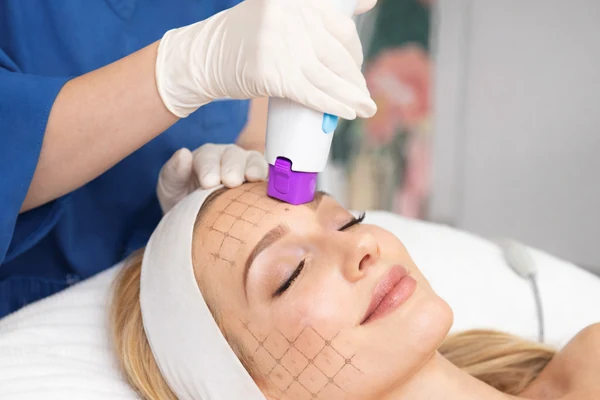
Morpheus8 Scale & Burst combines very fine insulated needles with bipolar radiofrequency energy. The needles create tiny channels, and the radiofrequency heats the tissue at each needle tip. That heat tightens existing collagen and prompts new collagen to form over the following weeks.

Rather than heating one level per pass, the handpiece releases energy at several depths in a single pulse. The manufacturer describes this as delivering bipolar RF to multi-level soft tissue depths. This lets Nurse Rashmi Mehta match depth to each area, so the jawline is treated differently from the abdomen.

For selected patients, we may apply exosomes topically straight after treatment, while the micro-channels are still open. This is discussed at consultation and is not suitable or necessary for everyone.

Who it is best suited for

  • Adults with early to moderate skin laxity on the lower face, jawline or neck
  • Uneven texture, enlarged pores or crepey skin
  • Rolling and boxcar acne scars, as part of a scar treatment plan
  • Crepey skin on the abdomen, arms or above the knees
  • Older, white stretch marks

Your treatment journey at Orovenza

  1. Consultation. You meet Nurse Rashmi Mehta at Langham Hospital. She assesses your skin, history and goals, and tells you honestly if another option would suit you better.
  2. Your plan. You receive a written plan covering areas, depths, number of sessions and spacing. Where a prescription-only medicine is needed, it is prescribed by Dr Edwin Anthony (GMC 4776646), Lead Clinician at Contoura Medical.
  3. Treatment day. Numbing cream is applied for around 45 to 60 minutes. The treatment itself usually takes 20 to 45 minutes depending on the area.
  4. Aftercare. You go home with written aftercare instructions and a direct number to call.
  5. Review. We check healing and progress after each session and at the end of your course.

Results and how long they last

Some tightening shows early, but most change comes from new collagen, so results build over the months after your course. We review final results around three months after your last session.

  • A 2026 systematic review in Aesthetic Plastic Surgery pooled 41 studies, including 15 randomised controlled trials, and found radiofrequency microneedling effective across acne scarring, laxity and photoageing.
  • In a 2025 review of radiofrequency microneedling for acne scars, most studies followed patients for one to six months after their last treatment, and a typical protocol was three sessions at one-month intervals.
  • Cleveland Clinic advises that, with good skincare, the effects of radiofrequency skin tightening may last one to three years.

Results vary with skin quality, age, lifestyle and sun protection.

Recovery and aftercare

  • Day 1 to 2: redness, warmth and mild swelling, similar to sunburn. Swelling can be more noticeable around the eyes in the morning.
  • Day 2 to 5: skin may feel dry or rough, with faint grid marks. Most people return to work within one to three days.
  • Avoid heavy exercise, saunas and swimming for 48 hours, and pause retinoids and acids for about a week.
  • Wear broad-spectrum SPF 50 every day and avoid direct sun and sunbeds for at least two weeks.

Safety, side effects and who should avoid it

  • The 2026 review found adverse events were mostly mild and short-lived, with redness, swelling and temporary discomfort the most common. A 2025 review reported that redness typically resolves within hours to a few days.
  • Less common: pinpoint scabbing, bruising and, rarely, post-inflammatory hyperpigmentation or infection.
  • Not suitable during pregnancy or breastfeeding, or with a pacemaker or metal implants in the area, or over active acne, cold sores or infection.
  • Not suitable if you have taken isotretinoin in the past six months, or have a history of keloid scarring.
  • Wherever you are treated, check your practitioner’s registration and training. The JCCP keeps a public register of approved non-surgical practitioners.

How it compares with other skin tightening options

Option What it treats Downtime Sessions Typical onset of results
Morpheus8 Scale & Burst Laxity, texture, acne scars, stretch marks, face and body Usually 2 to 5 days of redness and dryness Often 1 to 3, around 4 to 6 weeks apart Gradual, reviewed at around 3 months
Xerf radiofrequency Mild laxity and skin firmness, face and body Little or none A course, usually several sessions Gradual over 2 to 6 months
QuantumRF (surgical, Dr Edwin Anthony) More significant laxity, such as the neck, jowls, arms or abdomen Longer, discussed at surgical consultation Usually a single procedure Gradual over several months

How Orovenza compares

  • Treatment takes place in a hospital setting at Langham Hospital, Marylebone, not a high street salon.
  • Doctor-led, nurse-administered care, with treatment by Nurse Rashmi Mehta and clinical leadership from Dr Edwin Anthony, a GMC-registered surgeon.
  • A consultation before every treatment.
  • A fixed consultation fee that is not deducted from treatment prices.
  • An individual plan with depths chosen for each area.
  • Planned aftercare reviews.

Related treatments

To find out whether Morpheus8 Scale & Burst is right for you, start with a consultation at Langham Hospital, 77 Hallam Street, Marylebone, London W1W 5HB, or call 020 3890 1911. Consultation fees are fixed and are not deducted from treatment prices, and your practitioner confirms your personal treatment cost at consultation. Book a consultation

Morpheus8 prices at Langham Hospital

Morpheus8 Scale & Burst with Orovenza is available at Langham Hospital, 77 Hallam Street, Marylebone only. You can choose treatment with Nurse Rashmi Mehta or with Dr Edwin Anthony, Lead Clinician. All prices include VAT.

Signature course: Morpheus8 with NCTF skin booster

Our recommended plan is a course of three Morpheus8 sessions, 4 to 6 weeks apart, with an NCTF skin booster at every visit. NCTF is a hyaluronic acid skin booster enriched with vitamins, amino acids and antioxidants, placed with fine injections to improve hydration and skin quality while Morpheus8 rebuilds collagen. As part of a course, NCTF is only £125 per session for the face, compared with £350 on its own.

Course of 3 with NCTF Nurse Rashmi Mehta Dr Edwin Anthony
Face £2,925 £3,725
Face and neck £3,800 £4,750
Face, neck and décolletage £4,425 £5,520
Exosome upgrade for all three sessions +£695 +£695

The doctor-led, nurse-administered face course works out at £975 per visit with NCTF included, only £25 more than a single Morpheus8 session on its own.

Morpheus8 single sessions and courses

Area Nurse Rashmi, single Nurse Rashmi, course of 3 Dr Anthony, single Dr Anthony, course of 3
Face £950 £2,550 £1,250 £3,350
Face and neck £1,250 £3,350 £1,600 £4,300
Face, neck and décolletage £1,450 £3,900 £1,850 £4,995
One body area (abdomen, inner thighs, arms, knees or buttocks) £1,100 £2,950 £1,450 £3,900
Each extra body area in the same session +£500 +£1,350 +£600 +£1,600
360 torso (abdomen, flanks and lower back) £2,500 £6,750 £3,200 £8,600

Add-ons and maintenance

  • NCTF skin booster with a single Morpheus8 session: £195 face, £245 face and neck, £295 face, neck and décolletage
  • Exosomes: £300 per session
  • Small area such as the eyes, upper lip or nasolabial lines, added to a main area: £350
  • Maintenance session after a course: from £850 with Nurse Rashmi Mehta and from £1,100 with Dr Edwin Anthony

Consultation fees are fixed and are not deducted from treatment prices. Your practitioner confirms your personal plan and price in writing after your consultation.

Frequently asked questions

How much does Morpheus8 Scale & Burst cost in London?

At Langham Hospital, Marylebone, Morpheus8 Scale & Burst starts from £950 per session with Nurse Rashmi Mehta and from £1,250 with Dr Edwin Anthony. Our signature face course of three sessions with an NCTF skin booster at every visit is £2,925 with Nurse Rashmi or £3,725 with Dr Anthony. Body treatment starts from £1,100 per area. Your practitioner confirms your personal cost at consultation, once your skin has been assessed and a plan agreed, so you know the full figure before you commit.

Does Morpheus8 Scale & Burst hurt?

Most patients describe it as uncomfortable rather than painful, with a hot, prickling feeling during each pulse. We apply numbing cream for up to an hour beforehand to reduce this. Bony areas such as the jawline feel stronger, and settings are adjusted whenever you need.

How much downtime is there after Morpheus8 Scale & Burst?

Expect two to five days of social downtime. Redness and mild swelling are usual for the first day or two, followed by dryness and faint grid marks. Most people return to desk-based work within one to three days. Deeper body treatments can feel tender a little longer.

How many sessions will I need?

Many patients need one to three sessions spaced around four to six weeks apart, although deeper acne scarring may need more. The exact number depends on your skin and goals, and we review progress after each session rather than booking everything upfront.

When will I see results from Morpheus8 Scale & Burst?

Some patients notice firmer, smoother skin within a few weeks, once the initial redness and swelling have settled. The main change comes from new collagen, which builds gradually, so results typically continue to improve for around three months after your final session.

How long do Morpheus8 Scale & Burst results last?

Results are not permanent because skin keeps ageing, but improvements may last one to three years with good skincare and daily sun protection. Many patients have a yearly maintenance session to keep collagen levels up. Smoking, sunbeds and significant weight changes can all shorten how long results last.

Is Morpheus8 Scale & Burst safe for darker skin tones?

Radiofrequency microneedling is generally considered one of the safer resurfacing options for darker skin, because most of the heat is delivered beneath the surface. Post-inflammatory hyperpigmentation can still happen, so we take a careful history, may suggest skin preparation and choose conservative settings. Strict sun protection afterwards is essential.

Can Morpheus8 Scale & Burst be combined with exosomes or other treatments?

Yes, for selected patients. Our most popular combination is an NCTF skin booster at each Morpheus8 visit, which costs £125 per session for the face as part of a course. Exosomes can also be applied topically straight after treatment, and some patients combine a course with polynucleotides or anti-wrinkle injections. Spacing matters, particularly around fillers, so we plan any combination at consultation rather than adding it on the day.

Who should not have Morpheus8 Scale & Burst?

It is not suitable during pregnancy or breastfeeding, if you have a pacemaker or metal implants in the area, or if you have active infection, cold sores or inflamed skin conditions where we would treat. We also wait six months after isotretinoin. Anyone with a history of keloid scarring should discuss this carefully at consultation.

Is Morpheus8 Scale & Burst or Xerf better for me?

Morpheus8 Scale & Burst is usually the better fit if you want to improve texture or scarring as well as firmness, and can allow a few days of downtime. Xerf is needle-free with little or no downtime, and suits people focused mainly on mild laxity. Some patients benefit from both, planned in sequence.

Sources

  1. Morpheus8, InMode
  2. Radiofrequency microneedling: a systematic review, Aesthetic Plastic Surgery, 2026
  3. Fractional radiofrequency microneedling for acne scars: a systematic review, Clinical, Cosmetic and Investigational Dermatology, 2025
  4. Radio Frequency (RF) Skin Tightening, Cleveland Clinic
  5. Joint Council for Cosmetic Practitioners, JCCP

Renuvion

Renuvion is a minimally invasive skin tightening procedure that uses helium plasma with radiofrequency energy under the skin, often straight after liposuction. It suits adults with mild to moderate laxity. Dr Edwin Anthony performs it at Langham Hospital, Marylebone, London.

What Renuvion is and how it works

Renuvion, made by Apyx Medical and previously known as J-Plasma, passes helium gas over an energised electrode to create a plasma. Through a thin handpiece placed under the skin via a small entry point, it delivers rapid, very short bursts of heat to the fibrous connective tissue beneath the skin. That tissue contracts immediately, and new collagen forms over the following months.

Renuvion is a tightening tool, not a fat removal procedure. It is most often used at the end of liposuction, once fat has been removed, to help the skin settle onto the new contour. It is a surgical procedure performed in theatre.

What the FDA says about Renuvion

The US Food and Drug Administration regulates devices in the United States, and its position is useful context for UK patients. In March 2022 it warned against using Renuvion/J-Plasma for aesthetic skin procedures it had not cleared. Since then, according to its updated safety communication of May 2023, specific uses have been cleared:

  • May 2022: the Dermal handpiece, for moderate to severe wrinkles in Fitzpatrick skin types I to III
  • July 2022: the APR handpiece, for loose skin of the neck and under the chin
  • April 2023: the APR handpiece, for coagulating tissue under the skin after liposuction for body contouring

The FDA states that the device has not been determined to be safe or effective for other aesthetic skin procedures, and advises patients to ask which device will be used and to discuss its benefits and risks. We follow that advice: at consultation, Dr Anthony explains exactly how Renuvion would be used in your plan.

Who it suits, and who it does not

  • Adults aged 18 and over with mild to moderate laxity, at a stable weight
  • Patients having liposuction who have some looseness over the treated area
  • Selected neck and under-chin laxity

It is not suitable for large folds of skin after massive weight loss, and it will not give the lift of a body lift or tummy tuck. If you are still losing weight, or cannot wear a compression garment as advised, it is better to wait.

The procedure day at Langham Hospital

  1. Planning. Areas are marked and photographed.
  2. Anaesthetic. Local anaesthetic, with IV sedation when Renuvion is combined with liposuction or larger areas.
  3. Treatment. The handpiece is passed under the skin in controlled strokes.
  4. Finish. Entry points are dressed and a compression garment is fitted.

Recovery timeline

  • Days 1 to 7: swelling, bruising, tenderness and a tight feeling. Light daily activity within a few days.
  • Weeks 1 to 2: most visible bruising settles.
  • Weeks 2 to 6: compression continues as advised, especially after liposuction. Exercise is reintroduced gradually.
  • Months 1 to 3: firmness improves as collagen remodels.
  • Months 3 to 6: the final result becomes clear.

Evidence, risks and safety

A 2026 meta-analysis of 34 studies and 3,508 patients reported pooled complication rates of 5% when helium plasma RF was used alone and 8% when combined with liposuction, with a pooled satisfaction rate of 92%. Most included studies were observational.

A 2024 single-centre review of 465 patients found seroma in 7.0% after Renuvion and 10.2% after BodyTite. That study was sponsored by the manufacturer of Renuvion, so it should be read with that in mind.

Possible complications include seroma, burns, prolonged swelling or firmness, pigmentation change, infection, numbness, contour irregularity and scarring. Rare serious events can occur with any subdermal energy device.

How it compares

Factor Renuvion QuantumRF BodyTite Turbo
Energy Helium plasma with RF Fractionated bipolar RF Bipolar RF
Removes fat No No Yes, melts and removes fat
Typical use Tightening after liposuction Tightening with little fat Fat and laxity together
Uses gas Yes, helium No No

For many patients with loose skin and little fat, QuantumRF is the simpler choice. Where fat and laxity sit together, Quantum Vaser Lipo or BodyTite Turbo may fit better. Dr Anthony will explain which suits your tissue, not which is newest.

Why patients choose Dr Edwin Anthony

  • Dr Edwin Anthony, Lead Clinician, Contoura Medical (GMC 4776646), personally performs every procedure
  • Over 1,500 VASER procedures and 14 years of dedicated VASER practice, with long experience of subdermal energy devices
  • Trained with Dr Alfredo Hoyos in high-definition liposculpture; MRCS (Edinburgh)
  • Regulated services provided under Langham Hospital’s CQC registration

Related procedures

Consultations take place with Dr Edwin Anthony at Langham Hospital, 77 Hallam Street, Marylebone, London W1W 5HB, 2 minutes’ walk from Great Portland Street and Regent’s Park stations, or by video. Call 020 3890 1911. Consultation fees are fixed and are not deducted from treatment prices. Your full price is confirmed in writing after consultation, with theatre fees and any IV sedation itemised. Book a consultation

Frequently asked questions

What is Renuvion?

Renuvion is a minimally invasive skin tightening procedure. A thin handpiece placed under the skin uses helium plasma with radiofrequency energy to heat the connective tissue so it contracts, and new collagen forms over the following months. It is often used after liposuction and is not a fat removal treatment in its own right.

Is Renuvion FDA approved?

Renuvion has FDA clearance for specific uses: certain wrinkles in lighter skin types, loose skin of the neck and under the chin, and coagulating tissue after liposuction for body contouring. In 2022 the FDA warned against other aesthetic uses, and it states the device has not been shown safe or effective beyond those cleared indications.

Who is suitable for Renuvion?

Adults with mild to moderate skin laxity at a stable weight, often those having liposuction who have some looseness over the area. It is not suitable for large folds after massive weight loss. If you are still losing weight or cannot wear a compression garment, it is better to wait until you can.

What anaesthetic is used for Renuvion?

Renuvion is usually carried out under local anaesthetic. When it is combined with liposuction or used over larger areas, IV sedation given by an anaesthetist is normally added so you stay comfortable. A general anaesthetic is not usually needed. Your plan is agreed with Dr Anthony at consultation.

How long is recovery after Renuvion?

Most people return to light activities within a few days. Swelling, bruising and tenderness usually settle over one to two weeks. When Renuvion is combined with liposuction, recovery is longer and a compression garment is worn for several weeks. The final tightening is judged at three to six months.

What are the risks of Renuvion?

Possible complications include seroma, burns, prolonged swelling or firmness, pigmentation change, infection, numbness and contour irregularity. A 2026 meta-analysis of over 3,500 patients reported pooled complication rates of 5% for Renuvion alone and 8% when combined with liposuction. Dr Anthony will discuss the risks that apply to you.

How is Renuvion different from QuantumRF?

Both tighten skin from underneath without removing fat. Renuvion uses helium plasma with radiofrequency and is commonly used straight after liposuction. QuantumRF uses fractionated bipolar radiofrequency with no gas and is often used on its own for loose skin with little fat. Dr Anthony recommends one based on your tissue and goals.

How long do Renuvion results last?

The tightening is long-lasting because it relies on tissue contraction and new collagen, but it does not stop ageing. Weight changes, sun exposure and smoking all affect how well results hold. Keeping a stable weight is the most useful thing you can do to protect the result.

How much does Renuvion cost?

The cost depends on the areas treated and whether Renuvion is combined with liposuction. Your full price is confirmed in writing after consultation, with hospital theatre fees and IV sedation itemised where needed. Our price list shows current fees, and finance is available through Chrysalis Finance for eligible patients.

Who performs Renuvion at Contoura Medical?

Dr Edwin Anthony, Lead Clinician at Contoura Medical, GMC 4776646, personally performs every procedure. He has performed over 1,500 VASER procedures across 14 years of dedicated VASER practice and trained with Dr Alfredo Hoyos in high-definition liposculpture. Treatment takes place at Langham Hospital in Marylebone, London.

Sources

  1. UPDATE: Use of Renuvion/J-Plasma Device for Certain Aesthetic Procedures: FDA Safety Communication, US Food and Drug Administration
  2. Helium Plasma Radiofrequency for Aesthetic Subdermal Treatment: A Systematic Review and Meta-Analysis, Aesthetic Surgery Journal Open Forum
  3. A Retrospective Review Comparing Renuvion Helium Plasma Radiofrequency with BodyTite Bipolar Radiofrequency after Liposuction or Body Contouring, Plastic and Reconstructive Surgery Global Open (PMC)

Vaser Hi Def & Soft Hi Def

Vaser Hi-Def is ultrasound-assisted liposculpture that removes fat around specific muscle groups to reveal definition, while Soft Hi-Def gives a subtler toned look. Both suit lean, active adults and are performed by Dr Edwin Anthony at Langham Hospital, Marylebone, London.

What Vaser Hi-Def is

Standard liposuction reduces a layer of fat evenly. Vaser Hi-Def works differently. Dr Anthony removes fat selectively from the grooves where the muscles meet, such as the lines either side of the abdominal muscles and the borders of the chest, while leaving a thin layer over the muscles themselves. Light then catches the muscle shape instead of a flat surface.

The technique was described by Dr Alfredo Hoyos, with whom Dr Anthony trained. It is the most technically demanding procedure in the VASER family, because small errors in depth or position show clearly on a lean body. It is surgery, performed in theatre, and it only works on a body that already has muscle underneath to reveal.

Hi-Def or Soft Hi-Def

Not everyone wants a sharply etched six-pack. Soft Hi-Def uses the same principles with a lighter hand, giving a toned, athletic outline without deep muscle lines. It is popular with women and with men who want to look lean rather than bodybuilt.

Factor Vaser Hi-Def Soft Hi-Def Vaser 4D Lipo
Look Pronounced abdominal, chest and oblique lines Subtle tone and gentle shadowing Natural shaping with gentle definition
Starting point Lean, muscular, low body fat Lean with reasonable tone Close to ideal weight, more fat to remove
Fat volume removed Usually small Usually small Larger, across several areas
Training needed afterwards High and ongoing Regular Stable weight and routine

Who is a good candidate

  • Adults aged 18 and over in good general health
  • A healthy, stable weight with low body fat
  • Stubborn fat hiding muscle definition despite regular training
  • Good skin elasticity over the abdomen, chest or arms
  • A genuine commitment to fitness: the clinic recommends regular gym training, ideally around five sessions a week
  • Realistic expectations about what surgery can and cannot create

Vaser Hi-Def is not suitable if you are carrying significant extra weight or have loose skin, because the lines would not sit correctly. In that case Dr Anthony may suggest Vaser 4D Lipo first, or combining with QuantumRF or Renuvion to help the skin settle.

The procedure day

  1. Muscle mapping. Dr Anthony marks the borders of each muscle group while you contract them.
  2. Anaesthetic. Local anaesthetic with IV sedation keeps you comfortable and relaxed. General anaesthetic is not needed.
  3. Ultrasound. VASER energy loosens fat in both the deeper and more superficial layers.
  4. Sculpting. Fat is removed evenly from the deep layer, then selectively along the marked lines to create shadow.
  5. Home. Garments go on in theatre and you leave the same day as a day case.

Recovery and aftercare

  • Days 2 to 3: light daily activities.
  • Week 1: discomfort usually settles with prescribed pain relief.
  • Weeks 1 to 6: compression is worn to control swelling and support the new contours.
  • From about week 4: strenuous exercise can restart once cleared. Returning to training matters, because muscle tone is what the definition depends on.
  • Around week 12: full definition is usually visible.

Risks and what the evidence shows

All surgery carries risk. Particular concerns with high-definition work include seroma, contour irregularity, asymmetry of the lines, burns at the entry points, pigmentation change, prolonged swelling and occasionally the need for revision. Results vary and cannot be promised.

The NHS advises checking that your surgeon is GMC registered and that the provider is registered with the CQC. Both apply here.

Why patients choose Dr Edwin Anthony

Dr Anthony trained with Dr Alfredo Hoyos in high-definition liposculpture and has since performed more than 1,500 VASER procedures over 14 years of dedicated practice. Before that he graduated from Trinity College Dublin (MB BCh BAO), gained MRCS (Edinburgh) and trained in NHS plastic surgery and burns units. As Lead Clinician at Contoura Medical (GMC 4776646), he personally performs every Hi-Def and Soft Hi-Def case at Langham Hospital, where services run under the hospital’s CQC registration.

Related procedures

To discuss Vaser Hi-Def or Soft Hi-Def, see Dr Anthony at Langham Hospital, 77 Hallam Street, Marylebone, London W1W 5HB, two minutes from Great Portland Street and Regent’s Park stations, or by video. Telephone 020 3890 1911. Consultation fees are fixed and are not deducted from treatment prices. Your full price is confirmed in writing after consultation, with IV sedation and hospital theatre fees itemised, and Chrysalis Finance is available. Book a consultation

Frequently asked questions

How is Vaser Hi-Def different from standard liposuction?

Standard liposuction reduces fat fairly evenly across an area. Vaser Hi-Def removes fat selectively around the edges of specific muscle groups, such as the abdominal and chest muscles, so their natural shape shows through. It needs precise mapping and considerable surgical experience, and it only suits people who are already lean with good underlying muscle tone.

What is Soft Hi-Def and who is it for?

Soft Hi-Def is a gentler version of Vaser Hi-Def. It creates a toned, athletic outline with subtle shadowing rather than deep, pronounced muscle lines. Many women choose it, as do men who want to look lean and fit without an obviously sculpted six-pack. The candidate requirements are similar, though slightly less strict.

Is Vaser Hi-Def done under general anaesthetic?

No. At Contoura Medical, Vaser Hi-Def is performed under local anaesthetic with IV sedation as a day procedure at Langham Hospital, Marylebone. You are relaxed and comfortable throughout without the need for a general anaesthetic. The sedation fee and hospital theatre fees are listed separately in your written quote.

Am I lean enough for Vaser Hi-Def?

Good candidates are at a healthy, stable weight, train regularly and have good skin elasticity, but still carry stubborn fat that hides their muscle definition. If you have more fat to lose or loose skin, Hi-Def lines may not sit well. Dr Anthony will examine you and may suggest Vaser 4D Lipo or another option instead.

How long is recovery after Vaser Hi-Def?

Most people return to light daily activities within two to three days. Compression garments are worn for several weeks, and strenuous exercise should wait for about four weeks, or until Dr Anthony clears you. Full definition usually shows at around twelve weeks, once the swelling over the muscle lines has settled.

Will I need to keep training after Vaser Hi-Def?

Yes. The definition depends on the muscles underneath and on staying lean. The clinic recommends regular gym training, ideally around five sessions a week, to maintain the look. If you gain weight or lose muscle tone, the lines will soften, even though the fat cells removed do not come back.

Which areas can Vaser Hi-Def treat?

It is most often used on the abdomen, flanks, chest and arms. Depending on your anatomy, it can also be applied to the back, thighs and calves. The plan is built around your own muscles, so Dr Anthony discusses at consultation which areas will give a balanced look rather than treating areas in isolation.

What are the risks of Vaser Hi-Def?

Risks include seroma, bruising, prolonged swelling, contour irregularity, uneven or unnatural lines, burns at the entry points, pigmentation change, infection, anaesthetic complications and occasionally the need for revision. Because the lines are visible on a lean body, precision matters. Dr Anthony explains your individual risks before you decide whether to proceed.

Can Vaser Hi-Def be combined with skin tightening?

Yes, where appropriate. Dr Anthony may combine Vaser Hi-Def with QuantumRF or Renuvion beneath the skin so that it contracts more closely over the new contours. This is considered when skin quality is borderline. It adds time and cost, so it is only recommended when it is likely to make a real difference.

Who performs Vaser Hi-Def at Contoura Medical?

Dr Edwin Anthony, Lead Clinician at Contoura Medical (GMC 4776646), performs every Vaser Hi-Def and Soft Hi-Def procedure himself. He trained with Dr Alfredo Hoyos in high-definition liposculpture, holds MRCS (Edinburgh) and has completed more than 1,500 VASER procedures across 14 years at Langham Hospital, Marylebone.

Sources

  1. VASER-Assisted High-Definition Liposculpture, Aesthetic Surgery Journal
  2. High-Definition Liposculpture 18-Year Evolution: Patient Safety and Aesthetic Outcomes, Plastic and Reconstructive Surgery (PubMed)
  3. Liposuction, NHS

QuantumRF

QuantumRF is a minimally invasive procedure that tightens loose skin from underneath using radiofrequency energy through a fine cannula. It suits adults with mild to moderate laxity, including after GLP-1 weight loss. Dr Edwin Anthony performs it at Langham Hospital, Marylebone.

What QuantumRF is and how it works

QuantumRF is a subdermal radiofrequency device made by InMode. Through a tiny entry point, a thin cannula is passed under the skin. It delivers short, fractionated pulses of bipolar radiofrequency energy to the fibrous web of connective tissue beneath the skin, while sensors monitor temperature. The heat makes this tissue contract straight away, and over the following months the body lays down new collagen.

Unlike liposuction, QuantumRF is not designed to remove fat. Its job is tightening. It is still a surgical procedure performed in theatre, even though the entry points are only a few millimetres long.

Loose skin after Mounjaro or Ozempic

GLP-1 medicines such as Mounjaro (tirzepatide) and Ozempic (semaglutide) can lead to substantial weight loss in a relatively short time. Skin does not always keep pace. The result can be a deflated look on the abdomen, inner thighs, upper arms, bra line or neck, even when the number on the scales is where you want it.

  • Wait until your weight has been stable for around three months
  • If you are still on medication, tell us your dose and plans; we may advise waiting
  • Expect tightening, not the removal of an overhang

QuantumRF sits between doing nothing and excisional surgery. It is a reasonable option for mild to moderate laxity. It is not a substitute for a body lift after massive weight loss.

Who it suits, and who it does not

  • Adults aged 18 and over with mild to moderate laxity and little excess fat
  • Common areas: abdomen, inner thighs, upper arms, bra line, knees, neck and under the chin
  • Non-smokers in good general health, at a stable weight

If you have hanging skin, a tummy tuck or other skin-removal surgery is more likely to meet your expectations, and we will say so. If you also have stubborn fat in the same area, Quantum Vaser Lipo treats both in one session.

The procedure day at Langham Hospital

  1. Planning. Dr Edwin Anthony marks the treatment zones and photographs them.
  2. Anaesthetic. The area is numbed with local anaesthetic. IV sedation is available if you would prefer it.
  3. Treatment. The cannula is moved in a set pattern under the skin while temperature is monitored. Most people feel warmth or pressure.
  4. Finish. Entry points are dressed and a compression garment is fitted where needed.

Treatment usually takes 30 to 90 minutes, depending on the size and number of areas. You go home the same day.

Recovery timeline

  • First 48 hours: swelling, tenderness and a warm or tight feeling. Most people return to light daily activities.
  • Week 1: bruising and swelling settle. Many return to desk-based work within a few days.
  • Weeks 2 to 4: compression is worn as advised and exercise is reintroduced gradually.
  • Months 1 to 3: collagen remodelling makes the skin feel firmer.
  • Months 3 to 6: the result stabilises.

What the evidence shows

Independent, peer-reviewed data on QuantumRF itself is still limited, so we do not quote specific contraction or complication percentages for this device. Much of the evidence for subdermal bipolar radiofrequency comes from earlier devices from the same manufacturer.

  • In a small 2015 study of 10 patients, arms treated with radiofrequency-assisted liposuction showed 22.6% linear contraction at 12 months, compared with 17.8% for liposuction alone.
  • By comparison, the NHS advises about 4 to 6 weeks off work after a tummy tuck, which is done under general anaesthetic and takes 2 to 5 hours.

Those figures come from different devices and settings, so they are a guide to the principle rather than a promise of your result.

Risks and safety

Expected effects include swelling, bruising, tenderness and temporary numbness. Less common risks include burns, prolonged firmness or lumps, seroma, infection, pigmentation change and uneven tightening. QuantumRF does not use helium gas, so it does not carry the gas-related concerns discussed for helium plasma devices, but any energy device can injure tissue if used poorly.

How it compares

Factor QuantumRF Renuvion BodyTite Turbo Tummy tuck
Energy Fractionated bipolar RF Helium plasma with RF Bipolar RF with fat melting None, surgical excision
Removes fat No No, often after liposuction Yes Some
Best for Laxity with little fat Tightening after liposuction Fat plus laxity Overhanging skin
Anaesthetic Local, sedation optional Varies with plan Local with IV sedation General

For the face and neck, EmbraceRF2 adds microneedling to subdermal radiofrequency to improve skin surface as well.

Why patients choose Dr Edwin Anthony

  • Dr Edwin Anthony, Lead Clinician, Contoura Medical (GMC 4776646), personally performs every QuantumRF treatment
  • Over 1,500 VASER procedures and 14 years of dedicated VASER practice
  • MRCS (Edinburgh), Trinity College Dublin graduate, NHS plastic surgery and burns training
  • Regulated services provided under Langham Hospital’s CQC registration

Related procedures

Consultations take place with Dr Edwin Anthony at Langham Hospital, 77 Hallam Street, Marylebone, London W1W 5HB, 2 minutes’ walk from Great Portland Street and Regent’s Park stations, or by video. Call 020 3890 1911. Consultation fees are fixed and are not deducted from treatment prices. Your full price is confirmed in writing after consultation, with theatre fees and any IV sedation itemised. Book a consultation

Frequently asked questions

Can QuantumRF tighten loose skin after Mounjaro or Ozempic?

It can help when the laxity is mild to moderate. QuantumRF heats the connective tissue under the skin so it contracts, and new collagen forms over three to six months. It cannot remove hanging skin, so if you have a true overhang, surgical skin removal is usually the more realistic option.

How long should my weight be stable before QuantumRF?

Dr Edwin Anthony recommends being at or near your goal weight, and stable, for around three months first. If you are still losing weight, your skin will keep changing and may loosen further after treatment. It usually makes sense to finish the weight-loss phase and then treat what remains.

Can I have QuantumRF while still taking a GLP-1 medicine?

It depends on whether your weight is still falling. If it has plateaued on a maintenance dose, treatment may be reasonable. If you are still actively losing weight, waiting is usually wiser. Tell us about your medication and any plans to change it, and Dr Anthony will advise you individually.

What is the difference between QuantumRF and a tummy tuck?

A tummy tuck cuts away excess skin under general anaesthetic, leaves a long lower abdominal scar and needs about four to six weeks off work. QuantumRF tightens the skin you already have through tiny entry points under local anaesthetic, with a much shorter recovery. It suits mild to moderate laxity only, not an overhang.

Is QuantumRF painful?

The area is numbed with local anaesthetic before the cannula is introduced, so most patients describe warmth or pressure rather than pain. IV sedation is available if you would prefer to be more relaxed. Afterwards the area feels tender and tight for a few days, and simple pain relief is usually enough.

How many QuantumRF sessions will I need?

Most patients have a single session for each area. The skin contracts at the time of treatment and continues to tighten as collagen remodels over three to six months. We review you during that period, and a further treatment is only discussed if there is a clear reason for it.

Which areas can QuantumRF treat?

The most common areas are the abdomen, inner thighs, upper arms, bra line, knees, neck and under the chin. Almost any area with mild to moderate laxity can be considered. Where there is also stubborn fat in the same area, Quantum Vaser Lipo combines fat removal with QuantumRF in one session.

How much does QuantumRF cost?

The price depends on the number and size of areas treated. Your full cost is confirmed in writing after consultation, with any theatre fees and IV sedation itemised in the quote. Our price list shows current fees, and finance is available through Chrysalis Finance for eligible patients.

What are the risks of QuantumRF?

Swelling, bruising, tenderness and temporary numbness are common and settle over days to weeks. Less common risks include burns, lumps or firmness, seroma, infection, pigmentation change and uneven tightening. Independent published data on QuantumRF itself is still limited, and Dr Anthony will talk through your personal risks at consultation.

Who performs QuantumRF at Contoura Medical?

Every QuantumRF treatment is performed personally by Dr Edwin Anthony, Lead Clinician at Contoura Medical, GMC 4776646. He trained in NHS plastic surgery and burns units, holds MRCS (Edinburgh) and has performed over 1,500 VASER procedures. Treatment takes place at Langham Hospital in Marylebone, London.

Sources

  1. Radiofrequency-Assisted Liposuction Compared with Aggressive Superficial, Subdermal Liposuction of the Arms: A Bilateral Quantitative Comparison, Plastic and Reconstructive Surgery Global Open (PMC)
  2. Tummy tuck (abdominoplasty), NHS

Thermage FLX

Thermage FLX is a non-surgical monopolar radiofrequency treatment that heats deep skin layers to tighten mild to moderate laxity on the face, eyes and body. Dr Edwin Anthony assesses and oversees every treatment at Langham Hospital, Marylebone, London.

What Thermage FLX is and how it works

Thermage FLX is non-surgical. There are no cuts, no needles and no anaesthetic injections. A treatment tip is placed on the skin and delivers monopolar radiofrequency energy, which passes through the surface and heats the collagen-rich dermis and the fibrous layer beneath it.

The heat does two things. Existing collagen fibres contract, which gives a small immediate firming. Then, over the following months, the body lays down new collagen, and this is where most of the improvement comes from. The FLX system uses AccuREP technology, which reads the skin before each pulse and adjusts the energy, with cooling spray and vibration to keep you comfortable.

Thermage FLX Intense uses higher energy settings for more advanced laxity or larger body zones. At Contoura Medical, FLX Intense is doctor-led.

Who it suits, and who it does not

  • Adults aged 18 and over at or near a stable weight
  • Mild to moderate laxity of the jawline, neck, upper and lower eyelids or brow
  • Crepey skin on the abdomen, arms, thighs, knees or buttocks
  • People who want improvement without surgery and can accept a gradual, moderate result

It is not the right tool for heavy folds of loose skin after major weight loss, for fat that needs removing, or for deep sagging of the face. Thermage FLX is not a weight-loss treatment. We will tell you plainly if a minimally invasive option such as QuantumRF or surgery would serve you better. Please tell us about pacemakers or other electrical implants, pregnancy, and any serious health conditions.

Your treatment day at Langham Hospital

  1. Preparation. Make-up and jewellery are removed, photographs are taken and a temporary grid is marked on the skin so energy is spread evenly.
  2. Treatment. The tip is moved square by square. You feel short bursts of deep warmth with vibration and cooling. You tell us how hot each pass feels and settings are adjusted.
  3. Timing. Face and neck take around 45 to 60 minutes; larger body areas take up to about 90 minutes.
  4. Afterwards. Most people go straight back to work. For FLX Intense, stronger comfort measures or mild sedation may be used, and you would then need someone to take you home.

Recovery and results timeline

  • Same day: mild redness or slight swelling, usually gone within hours
  • First few days: gentle skincare, broad-spectrum SPF, avoid saunas and strong sun
  • 2 to 6 months: gradual firming as new collagen forms
  • 6 to 12 months: final result usually visible
  • 18 to 24 months: many patients consider a single maintenance session

Evidence supports this gradual pattern. In a published survey of 5,700 monopolar radiofrequency facial treatments, 87% of patients showed immediate tightening with a multiple-pass technique, 92% still had tightening at six months, and 94% felt the results met their expectations. Results vary, and nobody can promise a particular outcome.

Risks and safety

Nothing breaks the skin, so the risks are lower than surgery, but not zero.

  • Temporary redness, swelling or tenderness
  • Small raised bumps or tender spots that settle over days to weeks
  • Rarely, burns, blistering or changes in skin colour
  • Very rarely, surface irregularity

Careful energy selection, based on your feedback about heat, is the main way these risks are reduced. The NHS advises taking time to decide and asking about complications before any cosmetic procedure, and we encourage the same.

How Thermage FLX compares

Factor Thermage FLX Thermage FLX Intense QuantumRF Surgical facelift
Type Non-surgical, on the skin Non-surgical, higher energy Minimally invasive, under the skin Surgery
Anaesthetic None Comfort measures, sometimes mild sedation Local anaesthetic Usually general
Downtime Usually none Usually minimal Light activity within about 48 hours 2 to 4 weeks
Degree of tightening Subtle to moderate Moderate Moderate to marked Greatest, removes skin

The NHS facelift guide describes 2 to 4 weeks of recovery and final results at 6 to 9 months. Thermage FLX will not match that degree of change, but it asks far less of you. For a wider comparison of devices, see our skin tightening overview.

Why patients choose Dr Edwin Anthony

  • Lead Clinician, Contoura Medical; GMC 4776646; MB BCh BAO (Trinity College Dublin); MRCS (Edinburgh)
  • NHS plastic surgery and burns training, then 14 years of dedicated VASER practice and over 1,500 VASER procedures
  • Experience across the full range of tightening, from Thermage FLX to EmbraceRF2 and surgical referral, so the choice of device is not driven by what one machine can do
  • Treatment at Langham Hospital, 77 Hallam Street, within the Harley Street medical district, under the hospital’s CQC registration

Thermage FLX can sit within a wider plan for the face, set out in our face treatments guide, or alongside body work planned as described in personalised contouring.

Related procedures

Consultations with Dr Edwin Anthony take place at Langham Hospital, 77 Hallam Street, Marylebone, London W1W 5HB, 2 minutes’ walk from Great Portland Street and Regent’s Park stations, or by video. Call 020 3890 1911. Consultation fees are fixed and are not deducted from treatment prices. Your full treatment price is confirmed in writing after consultation, and finance is available through Chrysalis Finance. Book a consultation

Frequently asked questions

Is Thermage FLX surgery?

No. Thermage FLX is a non-surgical treatment. Radiofrequency energy is delivered through a tip placed on the skin, so there are no incisions, stitches or scars and no general anaesthetic. Most people return to normal activities the same day. At Contoura Medical, Dr Edwin Anthony assesses every patient and oversees treatment at Langham Hospital, Marylebone.

How many Thermage FLX sessions will I need?

Most patients need a single treatment. Improvement builds for several months as new collagen forms, so a second session is not usually booked straight away. Many people choose a maintenance treatment every 18 to 24 months to hold the result. Dr Edwin Anthony will advise on timing once your final result has been reviewed.

Does Thermage FLX hurt?

You feel short pulses of deep heat with vibration and a cooling spray. Most people describe it as warm and uncomfortable at moments rather than painful. You give feedback throughout and the energy is adjusted. In a large published survey, only 5% of patients found the treatment too painful. For FLX Intense, stronger comfort measures or mild sedation may be used.

When will I see results from Thermage FLX?

Some firmness may be visible straight away, but the main change develops gradually over 2 to 6 months as new collagen forms. The final result is usually seen at 6 to 12 months. Results often last one to two years or more, depending on age, skin quality, sun exposure, weight stability and whether you have maintenance treatment.

What is the difference between Thermage FLX and FLX Intense?

Both use the same monopolar radiofrequency platform. FLX Intense uses higher energy settings for more advanced laxity, such as after pregnancy or weight loss, or for areas previously treated with liposuction that need more contraction. It can be less comfortable, so extra comfort measures may be used. Dr Edwin Anthony decides which suits you after examining your skin.

How much does Thermage FLX cost?

The price depends on the area treated and whether standard FLX or FLX Intense is recommended. Your full price is confirmed in writing after consultation, and you can see our price list online for guidance. Consultation fees are fixed and are not deducted from treatment prices. Finance through Chrysalis Finance is available for eligible patients.

Can Thermage FLX treat the eyes?

Yes. A dedicated eye tip is used for the upper and lower eyelids and around the brow, with protective eye shields in place. It can soften crepey eyelid skin and mild hooding. It will not remove heavy excess eyelid skin or fat bags, which need surgery. Dr Edwin Anthony will examine you and explain what is realistic.

What are the risks of Thermage FLX?

Temporary redness, swelling and tenderness are common and settle quickly. Small tender bumps can appear and fade over days to weeks. Burns, blistering, pigment change or surface irregularity are rare. Careful energy selection based on your feedback about heat reduces these risks. Tell us about any electrical implants, pregnancy or serious health conditions before treatment.

How does Thermage FLX compare with a facelift?

A facelift removes and repositions skin and deeper tissue, so it produces a larger change, but it needs an anaesthetic, involves scars and takes 2 to 4 weeks to recover from. Thermage FLX gives a subtler, gradual tightening with little or no downtime. It suits mild to moderate laxity, not heavy sagging of the face and neck.

Can Thermage FLX be combined with other treatments?

Yes. It is often combined with VASER liposuction for fat, with QuantumRF or EmbraceRF2 where more tightening is needed, or with skin quality treatments from Orovenza, our nurse-led division. The order and spacing of treatments matter, so Dr Edwin Anthony plans combinations at consultation rather than adding them on the day.

Sources

  1. Results of a survey of 5,700 patient monopolar radiofrequency facial skin tightening treatments, Dermatologic Surgery (PubMed)
  2. Facelift, NHS
  3. Before you have a cosmetic procedure, NHS