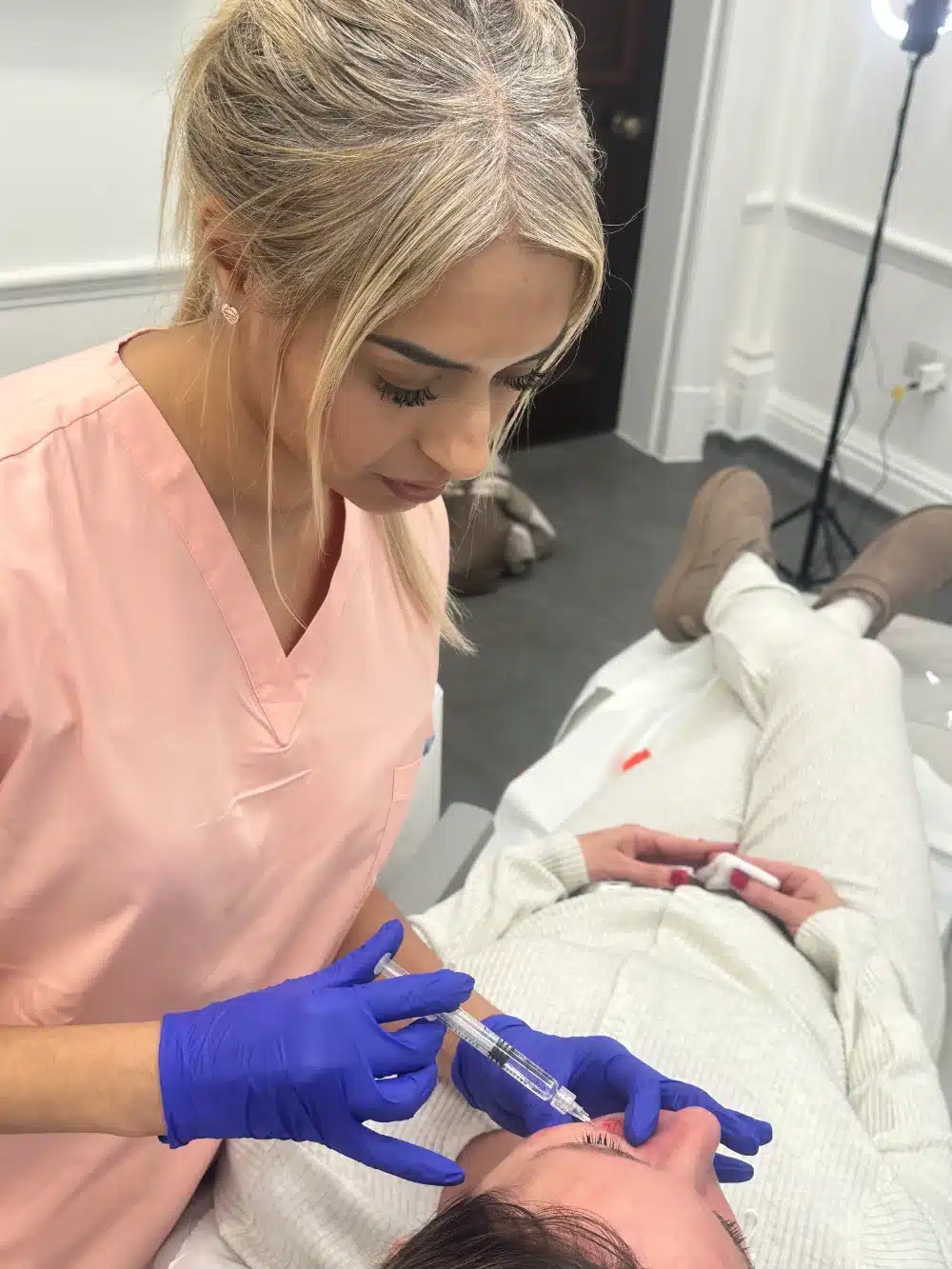
✓ Doctor-led treatment with Dr Edwin Anthony or Nurse Rashmi Mehta
✓ Part of Contoura Medical
Treatment for Pigmentation and Skin Quality
Picosecond laser treatment, delivered at Orovenza using the Picofy device, uses ultra-short laser pulses to target selected pigmentation and support overall skin quality with minimal disruption to surrounding skin. Suitability depends on skin type and the concern being treated, assessed individually beforehand.
Orovenza assesses your skin and pigmentation concerns before treatment, discussing the expected number of sessions and results based on your individual presentation.
Treatment Information
Treatment Details
What It Treats
Selected pigmentation concerns, sun damage and general skin quality irregularities.
Technology
Picosecond laser technology, selected for its precision and minimal impact on surrounding skin.
Downtime
Downtime is typically limited, though this varies according to the concern being treated.
Results Timeline
Pigmentation improvement often develops progressively over a course of sessions.
The Process
How Picosecond Laser Treatment Works
Skin Assessment
Your skin type and pigmentation concerns are assessed for suitability.
Treatment Planning
Laser settings and an expected course of sessions are proposed.
Treatment
Picosecond laser treatment is delivered according to the agreed plan.
Review
Your response is reviewed between sessions and the plan adjusted where needed.
By Dr Edwin Anthony, Lead Clinician, Contoura Medical · Treatments delivered by Nurse Rashmi Mehta · Last updated 5 November 2026
Picosecond laser is an ultra-short pulse laser that breaks up pigment and stimulates skin renewal with little heat. At our picosecond laser London clinic, Orovenza in Marylebone, it is for adults with sun spots, post-inflammatory marks, dull texture, enlarged pores or selected acne scarring.
Picosecond laser London: what it is and how it works
A picosecond laser fires pulses lasting trillionths of a second. At that speed the energy works mainly through a photoacoustic effect: a rapid pressure wave that shatters pigment into fine particles, which your body then clears. Older lasers relied more on heat, and heat is what tends to cause redness, downtime and rebound pigmentation.
A published case report in JAAD Case Reports describes this as delivering energy with minimal thermal heat, reducing the risk of hyperpigmentation. That is the main reason we favour it for patients with darker skin.
The laser can be used in two ways. A flat beam targets pigment directly. A fractional handpiece splits the beam into tiny points that create micro-injuries under the surface, prompting new collagen and smoother texture. Most people need a course of sessions a few weeks apart.
Who it is best suited for
People with sun spots or freckling on the face, hands or chest
Anyone with dark marks left after acne or inflammation
Those wanting brighter, smoother skin with enlarged pores
Patients with shallow, rolling or boxcar acne scars
Darker Fitzpatrick skin types who need a lower-heat option
People who cannot take a week or more off for resurfacing
Your treatment journey at Orovenza
Consultation and skin assessment: Nurse Rashmi Mehta reviews your skin, medical history, medicines and sun habits, and records your Fitzpatrick skin type. Pigment that looks like melasma is assessed carefully, because it needs a different approach.
Plan and skin preparation: You start a home routine with SPF, and pigment control where appropriate, often for 2 to 4 weeks. A test patch is carried out where needed, particularly for darker skin.
Treatment day: Numbing cream is applied for fractional treatments. The laser itself takes around 15 to 30 minutes for a full face.
Aftercare: We apply a soothing balm and SPF before you leave, and give you a written aftercare plan.
Review: Each session is preceded by a check of how your skin responded. Dr Edwin Anthony (GMC registered), Lead Clinician at Contoura Medical, provides medical oversight.
Results and how long they last
Sun spots often lighten noticeably after one to three sessions. Texture and scarring improve gradually, as new collagen forms over several months. Pigment we clear stays clear if you protect your skin, although new sun damage can bring new spots.
For acne scarring, a 2023 meta-analysis of seven studies found fractional picosecond laser gave similar improvement to other fractional lasers, with a lower risk of post-inflammatory hyperpigmentation and less pain. For complex pigment, the JAAD case report used 5 to 6 sessions spaced 4 to 6 weeks apart. Melasma is different again: the American Academy of Dermatology describes lasers as an add-on to medication, not a stand-alone cure.
Recovery and aftercare
First few hours: redness, warmth and mild swelling, similar to a light sunburn.
Days 1 to 2: fractional treatments may leave pinpoint marks or slight roughness. Make-up is usually fine after 24 hours.
Days 3 to 7: treated spots darken, crust lightly and flake off. Do not pick or scrub.
First week: gentle cleanser and moisturiser only. Stop retinoids and acids until your nurse advises.
Throughout the course: SPF 50 every morning and reapplied outdoors, and no sunbeds or tanning.
Avoid saunas, swimming and intense exercise for 48 hours.
Safety, side effects and who should avoid it
Common: short-lived redness, swelling, tenderness and pinpoint bleeding after fractional treatment.
Less common: temporary darkening or lightening of the skin, blistering and cold sore flare-ups.
The British Association of Dermatologists warns that laser can worsen pigmentation, especially in people of colour, which is why we patch test and start conservatively.
Not suitable during pregnancy, or over active infection, open wounds or a fresh tan.
We wait after recent isotretinoin and review photosensitising medicines.
Tell us about any history of keloid scarring, epilepsy triggered by light, or gold injections.
Comparing treatment options
Treatment
Best for
Typical downtime
Usual sessions
Darker skin suitability
Picosecond laser
Sun spots, PIH, texture, selected acne scars
Usually 1 to 3 days of redness
Often 3 to 6, about 4 weeks apart
Often suitable with careful settings
Chemical peels
Surface pigment, dullness, mild acne
1 to 7 days (superficial)
3 to 5, every 2 to 5 weeks
Good with superficial peels and preparation
CO2 laser
Deeper lines, significant scarring
Around 1 to 2 weeks
Often 1 to 2
Higher risk of pigment change, used cautiously
Microneedling
Texture, pores, acne scars
1 to 3 days of redness
3 to 6, 4 to 6 weeks apart
Generally suitable
How Orovenza compares
Treatment in a hospital setting at Langham Hospital, 77 Hallam Street, Marylebone
Doctor-led care, with treatment by Dr Edwin Anthony or Nurse Rashmi Mehta and clinical leadership from Dr Edwin Anthony
Skin assessment, Fitzpatrick typing and patch testing where needed
A consultation before every treatment, so settings are adjusted to how your skin responded
A fixed consultation fee, which is not deducted from treatment prices
Review appointments to track progress with photographs
Call us on 020 3890 1911 or book online to discuss whether picosecond laser suits your skin. Consultation fees are fixed and are not deducted from treatment prices, and your practitioner confirms your personal treatment cost at consultation. Book a consultation
Frequently asked questions
How much does picosecond laser cost in London?
The cost depends on the area treated, whether you need pigment or fractional treatment, and how many sessions your plan includes. A full face costs more than a few sun spots on the hands. Your practitioner confirms your personal treatment cost at consultation, and the consultation fee is fixed.
Does picosecond laser hurt?
Most people find it very manageable. Pigment treatment feels like quick elastic band snaps, and fractional treatment feels prickly and warm. We use numbing cream for fractional sessions. Any stinging usually settles within an hour, leaving skin that feels mildly sunburnt for the rest of the day.
How much downtime is there after picosecond laser?
Downtime is usually short. Expect redness for a few hours to two days, and light flaking or darkened spots for up to a week. Most people return to work the next day. Fractional treatment can leave pinpoint marks that make-up covers after 24 hours.
How many picosecond laser sessions will I need?
Most people need between three and six sessions, spaced about four weeks apart. Simple sun spots can need fewer, while acne scarring and stubborn pigment often need more. Your nurse reviews your skin before every session and adjusts the number, so the course reflects how you actually respond.
Is picosecond laser safe for dark skin?
It is often one of the more suitable lasers for darker skin, because it relies on pressure rather than heat. There is still a risk of pigment change, so we prepare the skin, carry out a test patch and start with cautious settings, increasing only when your skin tolerates treatment well.
Can picosecond laser treat melasma?
It can help some people, but only as part of a wider plan. Melasma is easily inflamed, and heat or aggressive settings can make it darker. We use gentle settings alongside daily SPF and pigment control creams, and explain that melasma often returns, so maintenance is part of the plan.
Is picosecond laser better than CO2 laser?
They do different jobs. CO2 laser removes surface skin for stronger resurfacing of lines and deep scars, but needs a week or more of recovery and carries more pigment risk. Picosecond laser offers gentler, gradual improvement with little downtime and is often preferred for pigment and darker skin.
Can I have picosecond laser in summer?
Yes, with care. Tanned or recently sun-exposed skin is at higher risk of pigment change, so we may lower settings or pause treatment. Keep up SPF 50 daily, avoid sunbathing, and allow at least two weeks between a session and a sunny holiday.
When will I see results from picosecond laser?
Pigment changes are usually visible within one to two weeks, once treated spots have flaked away. Texture and scarring take longer, because collagen builds slowly. Most people notice smoother skin after two or three sessions, with further improvement for around three months after the course ends.
Can picosecond laser be combined with other treatments?
Yes. It pairs well with superficial chemical peels for tone, microneedling for texture, and home pigment control for melasma or PIH. We space treatments a few weeks apart so the skin fully recovers in between, which keeps irritation and the risk of rebound pigment low.
Pricing depends on the treatment plan and number of sessions required. Your practitioner will confirm the cost of your personal treatment plan at consultation. Consultation fees are fixed and are not deducted from treatment prices.
Nurse Rashmi Mehta is the Aesthetic Nurse for Orovenza non-surgical aesthetics service at Contoura Medical.
Orovenza provides a clinically led approach to non-surgical aesthetic treatments, with treatment planning centred on individual assessment, appropriate indications and natural-looking outcomes.
Patients are assessed before treatment so that the most appropriate option can be discussed based on their goals and clinical circumstances.
To provide the best experiences, we use technologies like cookies to store and/or access device information. Consenting to these technologies will allow us to process data such as browsing behaviour or unique IDs on this site. Not consenting or withdrawing consent, may adversely affect certain features and functions.
Functional
Always active
The technical storage or access is strictly necessary for the legitimate purpose of enabling the use of a specific service explicitly requested by the subscriber or user, or for the sole purpose of carrying out the transmission of a communication over an electronic communications network.
Preferences
The technical storage or access is necessary for the legitimate purpose of storing preferences that are not requested by the subscriber or user.
Statistics
The technical storage or access that is used exclusively for statistical purposes.The technical storage or access that is used exclusively for anonymous statistical purposes. Without a subpoena, voluntary compliance on the part of your Internet Service Provider, or additional records from a third party, information stored or retrieved for this purpose alone cannot usually be used to identify you.
Marketing
The technical storage or access is required to create user profiles to send advertising, or to track the user on a website or across several websites for similar marketing purposes.